THE DAILY STREAM

Mike's site

Stuff and things

Latest updates
Newest first

Discovering, weekly

I love Spotify's Discover Weekly. It's incredibly outstanding. It's just about the best recommendation engine I've ever come across, save maybe Last.fm's. The mix of science and crowdsourcing behind it is fascinating; no wonder it works. It's even replaced Last.fm as my primary recommendation method, although to some degree that's because it's a push based system where I don't even have to try. It's always there for me.

Is there a downside to this? I don't really see one. In theory, people used to rely more on others to get their recommendations. This still uses your friends — and people you don't even know who share your current taste — to push recommendations to you. I actually liberally spam my friends with albums, too. I'd wager that if you were the type to do that before, you're still doing it, and if you weren't, you're getting more recommendations now.

There's a criticism that anything algorithmic is going to by its nature be "safer" and work within a set of boundaries, whereas randomly listening to college radio can break you out of your existing sonic box. I suppose that's valid, but I listen to such a wide variety of genres and popularity levels on Spotify that I don't really get that effect. Here's some stuff on the rock end of the spectrum I discovered using the playlist.

The Drink (dark twee folk-prog?)
(oembed: https://www.youtube.com/watch?v=EjMK6hMIFuo)

Milk Music (YouTube commenter gets it sorta right for once: "Sounds like the Wipers joined CCR and played Husker Du covers)
(oembed: https://www.youtube.com/watch?v=CPc5tHUn4ww)

Sheer Mag (whose record my friend Adam in Cleveland mastered)
(oembed: https://www.youtube.com/watch?v=Pr2um9KXkgQ)

🫠
Edited many years later: Shame about this, huh?
Discuss

Semantics vs Objects and other scary CSS animals

I suppose it was only a matter of time. The backlash always appears. It's a pretty old argument to be honest, the idea of getting "back to basics" or "using the web as it was meant to be used." But the reason that front end devs have gotten a bit away from these kinds of methods of styling is that it doesn't support everything that everyone wants to do anymore.

I'd still say that if you're making a website — even if you're working with atomic or styleguide-driven design — you're better off taking advantage of HTML elements, ARIA roles, and the cascade to style your site. But in the world of applications where structure is arbitrary and markup is not necessarily the most readable thing in the world (and guess what, this is often out of our hands), being reusable and "bulletproof" is more important to a lot of front end folks.

It's funny because this debate appears just as I'm finally considering adopting BEM in a project. I love — and need— the idea of a self-contained piece of UI that I can drop anywhere. At its best, this is front-end methodology as UX improvement, because the consistency of those pieces of UI helps the overall experience. Even without that benefit, it aids in speed of dev. Embarrassingly, perhaps the main reason that I gravitated toward BEM is that I'm sick of figuring out what to call things as I place HTML elements on a page.

Discuss

New Impercept EP

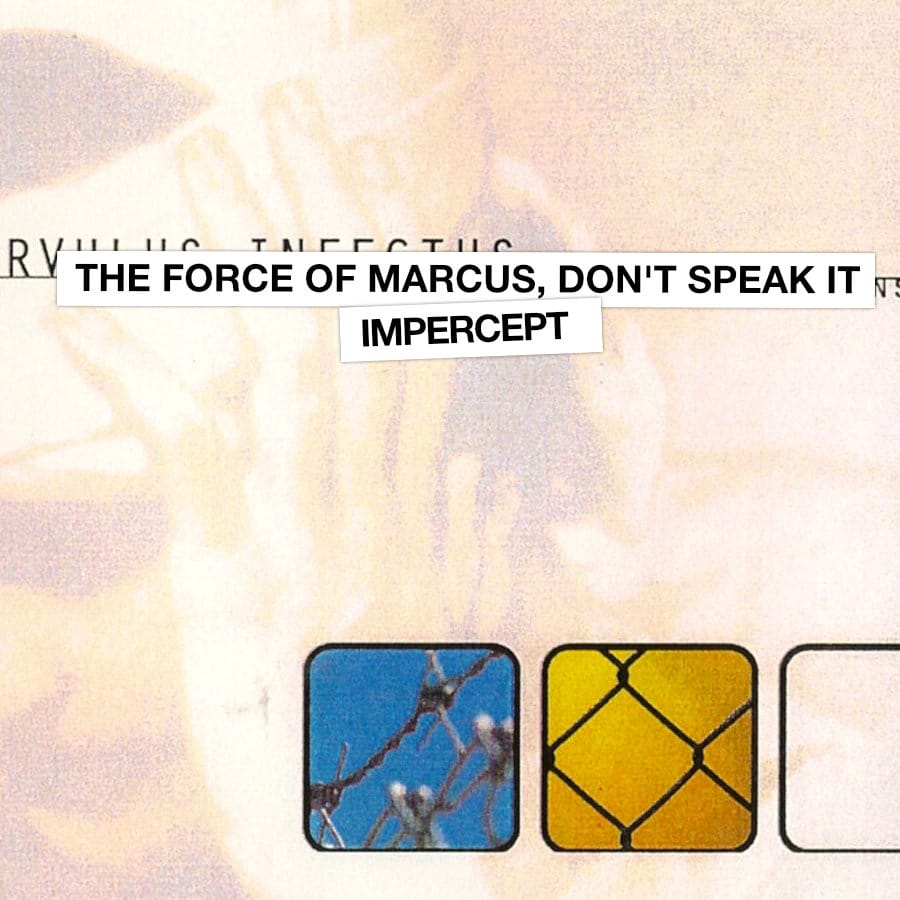
I spent a lot of time a couple months back experimenting with the new version of Reaktor. It doesn't actually work on my studio computer because it requires Yosemite, so it was something I could handle while at home on my newer Macbook Air (which runs Reaktor surprisingly well). For a cover and the title, I blasphemed the only Parvulus Infectus album released while we were together. It's maybe inspired by Bowie's cover for The Next Day.

Check it out here.

Have a listen, and maybe like Impercept on Facebook for more of my musical experiments that don't logically fit with one of my bands.

Discuss

Production design of High-Rise

This looks very cool. I tend to get pretty excited about JG Ballard movies in general — they turn out better than most Philip K Dick adaptations — and High-Rise looks pretty promising. These designs look authentically of a particular time, but their generic nature reminds me of the products in Repo Man.

Discuss

Desktop Neo

From a 21-year-old design student at Potsdam. It's not 100% practical. But the idea that revolution (or even evolution) in desktop operating system UIs is going to come not from Apple or Microsoft but from a kid who's been natively dealing with multi-touch screens since they were old enough to drive a car is plausible. The idea that folders are on the way out is already obvious, too.

Discuss

Live recording with local band the Nouns

Building up a portfolio of recorded, mixed work is not always done by traditional routes. That's especially true when your primary selling point as a recordist is mobility. I would probably love to get nothing but mix jobs — the work is fun, solitary, and low-pressure as long as you meet deadlines — but the challenges that take me out of my comfort zone are a big part of what make recording interesting.

The Nouns are a hip-hop and jazz crossover with elements of rock and R&B. They have a level of accessibility that jazz groups don't often achieve, and their talent level is sky-high. Their lineup consists of drums, keys, bass, sax, jazz singer (with some R&B/soul flavor) and an MC.

My strategy would be to mic them up for multi-tracking but not to get too angsty about bleed. They performed in a barely acoustic-treated music classroom at the University for a video shoot.

Challenges

The first unique aspect of this session would be running live sound in a small room while simultaneously recording. The drums didn't need amplification, and the bass and keyboard player both had amps. So I piped everything through my computer in the normal recording chain and produced two separate mixes. I ran a mix of just vocals and saxophone out to three channels of the PA for "house" sound. Then I gave my headphones everything. This worked surprisingly well with Presonus's Universal Control. It enables up to 4 mixes, but it's notoriously crash-happy the more you do with it. Thankfully, it held together enough to give me a 3-channel PA routing while recording all 8 channels of audio.

The bass and keys were easy to record: their amps had DIs and I recorded them direct. I loathe DI'd bass sound most of the time, but a little love from EQ in the mix usually helps and practicality won the day this time.

Mics

For the sax, a Beta 57 positioned a few inches off the bell and at the middle of the horn gave me a surprisingly good sound with minimal effort. I got tonality, articulation, and detailed reediness.

I stuck a pair of SM81s in an XY pattern over the drummer's head. I was able to get them fairly close, given that he's a jazz drummer with little to no arm swing. The XY of course keeps everything in phase, but it turned out to be a great fit for a unique kit. He uses two snares side by side, and no toms. I supplemented the kit with my old Oktava LDC in the front of the kick. The resulting sound has maybe more room sound than I would care for, and the hats are a bit wild on a couple songs, but it serves the musicality and dynamic range of the jazz style playing.

The singers each got an SM7B. This is a mic I had no experience with but I was pleased. Though it's a dynamic, it has a lot of detail and really requires a preamp to pull everything out of it. I put it through my cheapo ART Tube MPA preamp (tube-swapped to minimize noise) and my Symetrix 525 compressor/gate. I only took the biggest peaks off; the SM7B's sound is so smooth, it almost sounds like it's been hit with a compressor already. The MC gave a great delivery, and I cranked the tube preamp to give him a touch of grit. I had so much drum bleed in the singer's mic that even the gate wasn't helping. It's possible I should have switched her to a handheld, but even changing her position in the room may have helped. You live and learn. At the end of the day, though, an LDC would never have worked and an SM58 wouldn't have been very exciting.

Mix

I've been into the idea recently of "console-style" mixing. Initially I tried in the obvious choice, the new (v3) version of [Harrison Mixbus](http://harrisonconsoles.com/site/mixbus.html), but despite some huge improvements in performance it's still not quite ready for primetime. I will continue to experiment with it.

Slate

The "console" mentality proved a great way to justify trying out the new Slate subscription plugin program. While Avid is getting a lot of flak for moving to a subscription based model for all versions of Pro Tools going forward, Steven Slate is proving that execution (and a lot of brand good will going into it) can make all the difference.

The Slate VMR and VCC really tied the sound of all the tracks together, and the 3 EQs (SSL and Neve) and two compressors (Opto and 1176) available in VMR are about what I'd normally use. Since this project wouldn't be mastered, the Slate FG-X would let a non-mastering-engineer like myself put the final touch of volume and polish on the tunes.

Other Plugins

Despite the closeness of the overheads, I feel like the XY pattern gave me a bit too much room sound and the room really wasn't a great one. So I hit them with a bit of Tokyo Dawn's Proxmity plugin, an ingenious combo of reverb, compression, and EQ that can make sources sit closer or farther away in the mix. For the bass, I shamelessly applied Waves Renaissance Axx compression going into the Slate VMR. Surprisingly, I didn't use the Maag EQ4 on the singer. This had a lot to do with the drum bleed throwing unwanted frequencies into her mic; I needed to do more surgery on specific frequencies. The Maag has smart frequencies but they're fixed.

Roundup

This was a challenging recording situation. But with the exception of a few specific issues, the mix came together well. So I might have done something right. More than any other session, Shure saved the day. The Beta 57, far from being a "just good enough" versatile mic, was magic on the sax. And I can understand why the SM7B is such a popular microphone. But the stars of the show were really the SM81s. The simple drum mic setup worked great for jazz, and might make me rethink how I deal with a rock kit next time.

Discuss