It's not often you lose two absolute titans in the space of a couple days, let alone a couple guys that a good chunk of the population may have already thought were dead. So of course it could fix the dry blog spell. These were two troubled geniuses in an industry where "genius" is thrown around too much and "trouble" is manufactured way too easily.
I came to both Sly Stone and Brian Wilson late. Obviously both were all over oldies radio and I knew their hits by heart, but I didn't see why The Family Stone was important until later, and I didn't "get" the Beach Boys' most artistically successful period until the songs were dragged out of that oldies radio and experienced in the context of the whole Pet Sounds album. When you get into stuff like the Elephant 6 groups, or Jens Lekman, or any number of "baroque pop" acts, you start to realize that he's the wellspring.
As for Sly… on a visceral, purely emotional level I never felt him the way I felt James Brown, but many years ago I bought a used record of There's a Riot Goin' On and I guess I was ready for it. There are weird drum machines, odd textures, entire songs filtered so there's barely any high end — it's experimental in a way that even the Beatles or Stevie Wonder didn't do. And it's funky as hell, played by a mixed-race, mixed-gender group.
It's sad that both of these guys, even though they were highly appreciated in their time, went through at least 6 or 7 levels of Dante's Hell (which circle is "Shortenin' Bread"?), but they seemed to settle into some comfortable elder-statesman status later in life.
So said David Lynch, via the Log Lady. Not today, though.
I can't remember the last time such a wide swathe of people and social media accounts were pouring their hearts out about how they feel on someone's passing. It's a testament to how he touched everyone he met and worked with, and how he inspired the artists he never did. Even NASA posted a tribute.
The work, as you probably can imagine if you know me, is hugely important. Eraserhead is a bible for a certain aesthetic that I'll never really grow out of. Pabst Blue Ribbon, no matter how many times I hold a can, will always make me hear Dennis Hopper in my head. And of course, coffee and pie are magical talismans of goodness and purity in a dark, corrupted world.
The thing that probably stands out most to me about the man himself was that he just didn't compromise. Well, he did once, and that was Dune. He would just as soon that hadn't happened, though it holds a special place in a lot of our movie collections. He wouldn't shorten scenes, he wouldn't remove parts, he wouldn't use product placement. As a result, he perhaps made fewer movies before retiring than he might've wanted to — but they were all his movies. I think most artists, especially in this era where even the hobbyists and weekenders are pressured into feeling like they need to turn their work into "content," should pay attention to that.
And whether you believe this or not, it's worth taking it into account as we grieve:
You have to keep Angelo [Badalamenti, of course] alive. I believe life is a continuum, and that no one really dies, they just drop their physical body and we'll all meet again, like the song says. It's sad but it's not devastating if you think like that. Otherwise I don't see how anybody could ever, once they see someone die, that they'd just disappear forever and that's what we're all bound to do. I'm sorry but it just doesn't make any sense, it's a continuum, and we're all going to be fine at the end of the story.
My mom loved to say she hated Kris Kristofferson. We used to go back and forth over that. She'd say he couldn't sing, I'd say it didn't matter because he was more of a writer. He was respected by the greats, not just the singers who sang his songs, but to other renowned writers like Willie Nelson and Bob Dylan. He couldn't really act either, though he probably edged out Willie in that regard.
What a lot of folks are remembering him for right now though, since Sinead O'Connor's death is still fairly fresh, is his defending her when nobody else would. Maybe it's problematic to remember such a fierce feminist with an event like this ("I didn't need a man to rescue me," she later said, though she was indeed shaken). But it's a great way to remember a good ol' boy who — like Willie — often defied stereotypes.
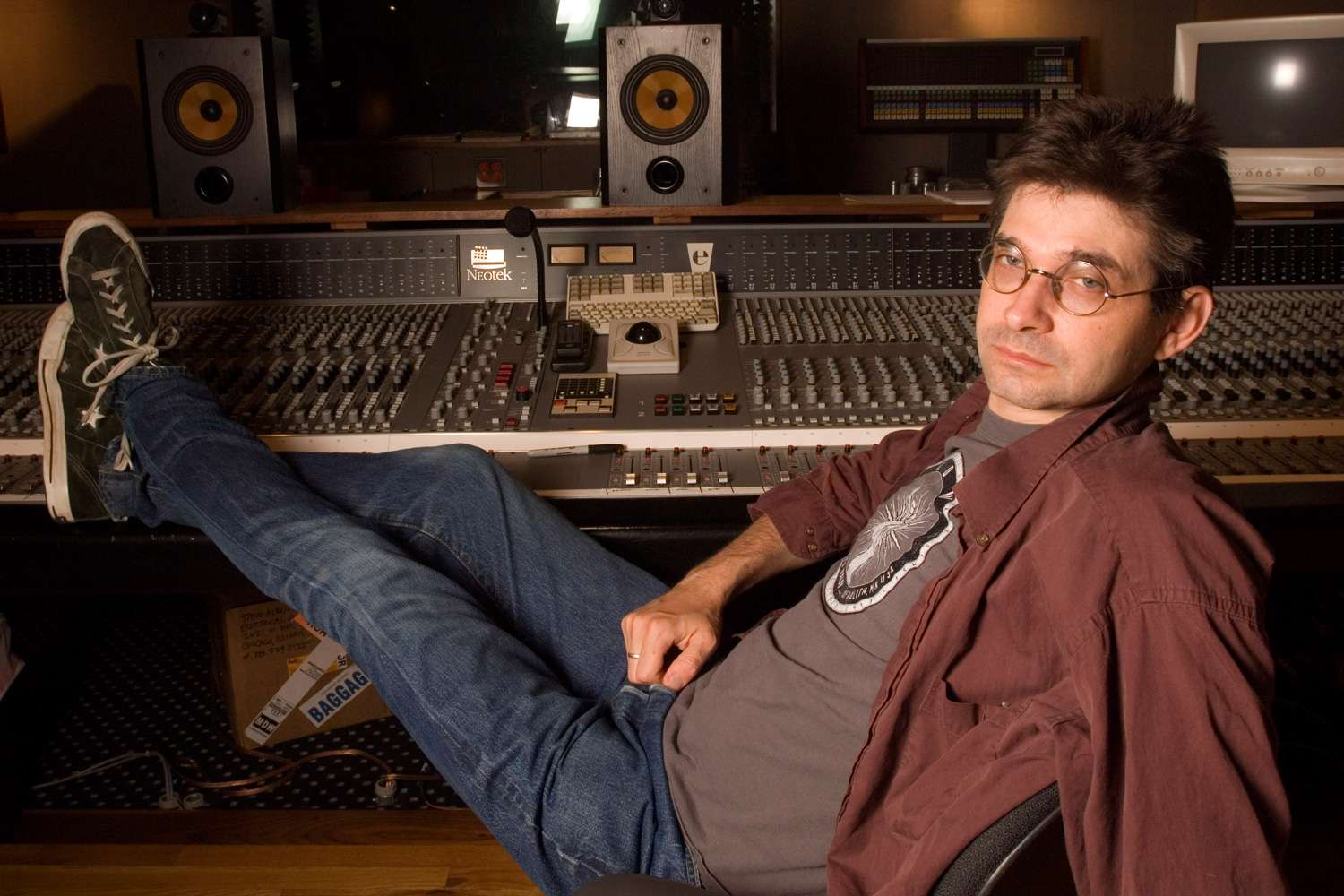
Apparently I'm only inspired to write when someone dies? But this is a tough one. Steve Albini was a guy who affected me musically long before I heard Big Black, though that was a truly formative experience for me as a musician and a music nerd.
He of course recorded Nirvana for In Utero and was famously rebuffed by their major label. He then recorded the jillion-selling "Nirvana with the punk rock all sanded off" Bush, who were inspired by In Utero in the same way that Kurt and Krist were inspired by the Pixies'Surfer Rosa and Pod by The Breeders.
Big Black
But it was the first spin of "Steelworker" from the debut Lungs that really did it for me. Not only was this a song that used a drum machine with heavy guitars years before Godflesh's debut or Ministry's pivot to metal, but lyrically it was a marvel. He was clearly inhabiting a character. But rather than a purely sympathetic view of a blue-collar man or a portrait of a hillbilly as racist and ignorant, it was a multi-dimensional piece of writing that really got under my skin (much like the "great big thing crawling all over me"). I ate up the rest of the discography, though I got into Shellac a good bit later.
Recording
In the subsequent years, I found a Steve Albini recording credit to be the mark of a certain type of band or artist. Whether it's Joanna Newsom or Sunn O))), if you seek him out there are certain things you're looking for, and most of all it's probably a punk-informed dedicationt to making a band "sound like they sound." No tricks, no double-tracking, minimal overdubs — he even eschewed compression most of the time in favor of the full dynamic range of the amps and drums sitting in his studio's mud-brick rooms. As much as he'd deny it, there is a sound to his records, but it's primarily that sound of Electrical Audio and its walls, not of a producer imposing an aesthetic on bands.
Becoming better
One thing most people knew about Steve Albini, a perception that he had a hard time changing, is that he was a prickly, opinionated individual with a knack for trash talk. This, combined with the, uh, boundary-pushing nature of a lot of his musical and related output (see both "Rapeman" as a band name and the Forced Exposure articles that are getting him gotcha-branded posthumously, accusations I'm not really gonna take seriously), made him the perfect candidate for the project that he undertook in the last few years: reckoning with his past as an OG edgelord. I think it's reasonable to say that he provides a good example for anyone who really feels punk rock values but may have gotten caught up at one time or another in the more "fuck you, mom" aspects of punk culture, and a template for living with principles. Bonus, it's a template for all dudes, white people, and cis people who might've thought that they could get away with certain stuff because of the way they feel in their hearts or whatever. In a dual interview with Vish Khanna, he comes down on Ian Mackaye of all people for falling into the trap of thinking that punk rock shouldn't be "PC," by defining "PC" as pretty simply as conservative rebranding of "not being an asshole."
Giving
Albini seems to have been quite generous. He spent the last twenty years raising money and personally delivering needed presents for the most down-and-out Chicagoans on Christmas. And he regularly shared his knowledge of making records, trying very hard to be practical and demystify not just his, but all practices of recording sound. Not just in expensive meet-the-masters type courses, but in countless freely available videos on YouTube.
All of this adds up to a person I felt I could be inspired by, and who was loved by most people who knew him. It's going to be a strange world without him.
A few days before the earth-shattering news that Steve Albini had passed, we lost another great of the punk rock world, the mighty Gary Floyd.
Floyd was the frontman of the Austin TX punk group The Dicks, and aside from being an early figure in non-LA hardcore, he was a bold-ass human being who was 300+ pounds, openly gay, openly communist, and often in drag on stage. And for all of Austin's reputation as a haven for weirdos and punks, it was and is still in Texas. So I'd argue Gary Floyd was one of the bravest, gnarliest, most badass punks in a genre that even then was becoming increasingly tough-guy and jock-ified.
So RIP to one of the realest to ever do it, and one of the very few people to get a Butthole Surfers song named after him.
As you get older, more and more entire bands will be gone. The Band entered that realm last year with the death of leader Robbie Robertson, and it's been 10 years without any original Ramones on this earthly plane. Now only the original keyboardist Irmin Schmidt remains from the classic lineup of Can.
Damo Suzuki, as the legend goes, was discovered by a recently-singerless Can as a busker and joined the same day.
When they asked me to sing, I never thought that I’d stay with this band or be invited to make recordings of LPs, I never had such a dream.
A guy who left Japan on a whim the day after his 18th birthday, he barely spoke German at the time and wasn't particularly great at English either. He had a dream of being a cartoonist, and felt that the hippies around him in '68 were trend-following egoists rather than true free spirits. Can, however, were a different story:
Everybody in the band is quite special. And they had different interests in music. Jaki was free jazz, Irmin [Schmidt] was a conductor of an orchestra, Holger [worked with] Stockhausen and Michael [Karoli] was a young rock guitarist. And I was a hippie! So five totally different people with five different directions. With the chemistry, naturally it came together. That’s why it’s quite timeless music.
He left after three stone-cold, monumentally influential and still-relevant albums at 23 to become a Jehovah's Witness. But it seems like it was a pattern for him to not be a joiner, and though he considered himself a Christian until he died, he left that organization after a couple years as well.
He spent a lot of time touring with random musicians and not rehearsing, preferring spontaneity — and getting away with such insanity because he was Damo Suzuki. I was lucky enough to see him around 20 years ago with a Boston band called Cul de Sac and he was still a magical performer.
It seems so recently that YMO’s Yukihiro Takahashi passed, and now we lose another of the great trio, and probably the one who is most well-known internationally outside of the group. Ryuichi Sakamoto was not only the heartthrob of the band, he had an extremely prolific solo output (his most recent release came out in January), collaborated with rad people like David Sylvian, Fennesz, Alva Noto, and Iggy Pop, and has even won an Oscar for scoring The Last Emperor (and probably deserved another for The Revenant but was ruled ineligible for dumb reasons).
This article, titled “Music Sounds the Way it Does Because of Ryuichi Sakamoto”, is a great read but if you don't feel like taking the time, just trust the title. The man lived in the future but was grounded in organic and acoustic sounds, especially the piano. He will be monumentally missed.
Here is his beautiful collab with David Sylvian, “World Citizen (I Won’t Be Disappointed).”
Are these the only posts I write anymore? Talk about a legend right here, Burt Bacharach shuffled off at 94. I have to say that's a good run.
The man, along with Hal David turned complex, jazz-derived chords and combinations into sublime, accessible pop. He collaborated with Elvis Costello and of course Dionne Warwick, among others, and inspired not just easy-listening mellow cats, but a huge range of artists that included Arthur Lee and his proto-punk band Love.
A true titan of music. Rest well and thanks for the music.
This one is a little late. But here's a guy who was the vocalist and drummer of the legendary Yellow Magic Orchestra, and then — like his other two bandmates — went on to an almost equally-legendary solo discography. Like Bowie, Peter Gabriel, and Robert Fripp, Takahashi is a big inspiration on everything I do that involves "songs" or "musicality." He never strayed away from pop or accessibility, but always kept it a little left-of-center.
Here's an insanely 80s video for the title track of my favorite of his, Murdered By The Music.
If the memes and jokes are to be believed, 2022 wasn't any more of a picnic than any year since the pandemic started. Or since 2015 maybe. Or the century. Or eternity maybe. But truly, we did lose some real ones in the music world.
If you haven't heard of any of these folks, I suggest you check them out. There's a lot of great art here.
Terry Hall. The last one of the year to go that I noticed, the Specials singer was a big loss to my musical history.
Keith Levine. I was a little late to PiL, but so many of the guitarists I admire, like Daniel Ash, owe a ton to him. His work on Metal Box still blows me away.
D.H. Peligro. An incredible drummer for one of the greats in hardcore, and one of the few and the proud who proved that punk wasn't just white guys and Bad Brains.
Jerry Lee Lewis. What can you say about the Killer that hasn't been said? Not the original wild man of rock and roll, but an early trash fire who paved the way for many more. Still energizing to listen to.
Pharaoh Sanders. One of the few jazz guys I really get into. Truly expanding stuff.
Andy Fletcher. Depeche Mode was an early expansion into electronic music for me, and probably half the known universe too.
Mark Lanegan. One of those guys who seemed to court death for a long time before they finally hooked up. A great lyricist and so unsung in the world of Seattle music.
Rachel Nagy. I think I only saw the Detroit Cobras once when I lived there, but they were legendary. Too young, and I still haven't heard what happened.
Vangelis. I was never a huge fan, but it's safe to say in hindsight he's one of the people who introduced me to electronic music. Maybe Jarre had more influence on me, but only because he came later — and because Vangelis's "Chariots of Fire" was so omnipresent.
Lamont Dozier, Dennis Waterman, Ken Williams. You might not know these names. Look them up. That's a lot of firepower lost. These are guys with both art and craft, guys whose results are very difficult to argue with.
Klaus Schulze. Up until relatively recently, I knew him mostly from the first Tangerine Dream album and Ash Ra Tempel, but even that'd be enough to cement him in my mind as one of the greats. But then there's Timewind,Angst, and a billion other releases. A master.
The big hoedown in the sky. Country was hit hard in '22. C.W. McCall might've been a one-hit wonder ("Convoy") but it was a monster and it always makes me think of my uncle who knew every word and maybe still does. Then Mickey Gilly, Naomi Judd, and Loretta Lynn? All pioneers and legends.
Classic rock radio. Dan McCafferty of Nazareth, Wilko Johnson of Dr. Feelgood, Christine McVee, Meat Loaf. Can't say I'm necessarily a fan of any of them, but their stature was undeniable. And of course, there's Meat's masterful performance in Fight Club.
Coolio. It's fucking Coolio. How is Coolio gone?
Taylor Hawkins. The Foos are not one of my favorites either, but it sure seems to me that he was loved by pretty much everyone who came across him.
The lords of the synth. This year we lost both John Appleton, the inventor of the Synclavier, and Dave Smith, the man behind Sequential Circuits and one half of the pair responsible for MIDI.
Ronnie Spector. Between her and Lamont Dozier both leaving the building, a massive chunk of Motown is gone. No disrespect to Diana Ross but Ronnie was always my favorite.
Angelo Badalamenti and Julee Cruise. This is some serious garmonbozia. Angelo had a good run at least, but I was hoping to hear more from him.
Mimi Parker. Saved the hardest for last. I truly don't know what to say about this one. So here's a video.