THE DAILY STREAM

Mike's site

Stuff and things

Latest updates
Newest first

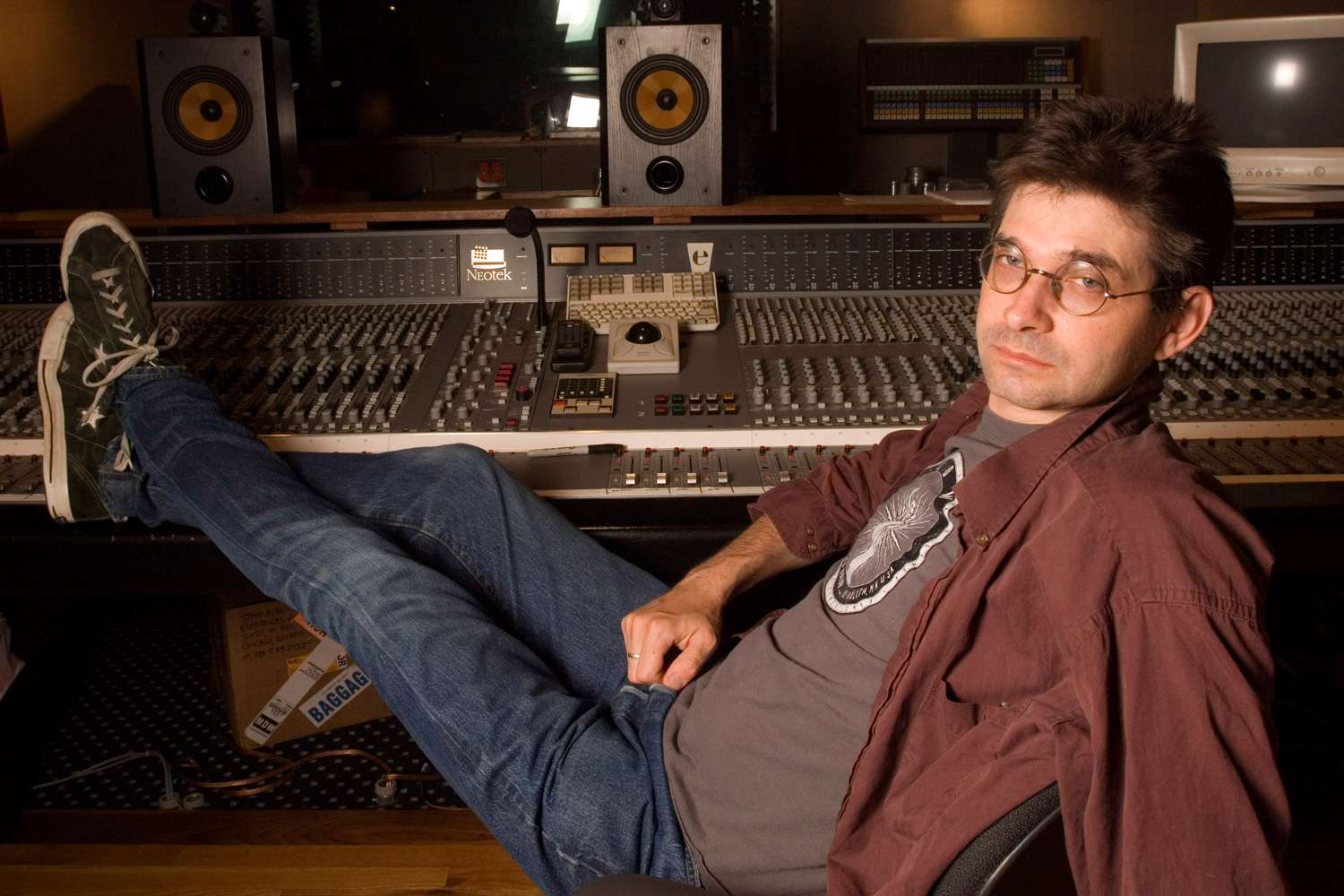
A world without Steve Albini

Apparently I'm only inspired to write when someone dies? But this is a tough one. Steve Albini was a guy who affected me musically long before I heard Big Black, though that was a truly formative experience for me as a musician and a music nerd.

He of course recorded Nirvana for In Utero and was famously rebuffed by their major label. He then recorded the jillion-selling "Nirvana with the punk rock all sanded off" Bush, who were inspired by In Utero in the same way that Kurt and Krist were inspired by the Pixies' Surfer Rosa and Pod by The Breeders.

Big Black

But it was the first spin of "Steelworker" from the debut Lungs that really did it for me. Not only was this a song that used a drum machine with heavy guitars years before Godflesh's debut or Ministry's pivot to metal, but lyrically it was a marvel. He was clearly inhabiting a character. But rather than a purely sympathetic view of a blue-collar man or a portrait of a hillbilly as racist and ignorant, it was a multi-dimensional piece of writing that really got under my skin (much like the "great big thing crawling all over me"). I ate up the rest of the discography, though I got into Shellac a good bit later.

Recording

In the subsequent years, I found a Steve Albini recording credit to be the mark of a certain type of band or artist. Whether it's Joanna Newsom or Sunn O))), if you seek him out there are certain things you're looking for, and most of all it's probably a punk-informed dedicationt to making a band "sound like they sound." No tricks, no double-tracking, minimal overdubs — he even eschewed compression most of the time in favor of the full dynamic range of the amps and drums sitting in his studio's mud-brick rooms. As much as he'd deny it, there is a sound to his records, but it's primarily that sound of Electrical Audio and its walls, not of a producer imposing an aesthetic on bands.

Becoming better

One thing most people knew about Steve Albini, a perception that he had a hard time changing, is that he was a prickly, opinionated individual with a knack for trash talk. This, combined with the, uh, boundary-pushing nature of a lot of his musical and related output (see both "Rapeman" as a band name and the Forced Exposure articles that are getting him gotcha-branded posthumously, accusations I'm not really gonna take seriously), made him the perfect candidate for the project that he undertook in the last few years: reckoning with his past as an OG edgelord. I think it's reasonable to say that he provides a good example for anyone who really feels punk rock values but may have gotten caught up at one time or another in the more "fuck you, mom" aspects of punk culture, and a template for living with principles. Bonus, it's a template for all dudes, white people, and cis people who might've thought that they could get away with certain stuff because of the way they feel in their hearts or whatever. In a dual interview with Vish Khanna, he comes down on Ian Mackaye of all people for falling into the trap of thinking that punk rock shouldn't be "PC," by defining "PC" as pretty simply as conservative rebranding of "not being an asshole."

Giving

Albini seems to have been quite generous. He spent the last twenty years raising money and personally delivering needed presents for the most down-and-out Chicagoans on Christmas. And he regularly shared his knowledge of making records, trying very hard to be practical and demystify not just his, but all practices of recording sound. Not just in expensive meet-the-masters type courses, but in countless freely available videos on YouTube.

All of this adds up to a person I felt I could be inspired by, and who was loved by most people who knew him. It's going to be a strange world without him.

Discuss

RIP Gary Floyd

A few days before the earth-shattering news that Steve Albini had passed, we lost another great of the punk rock world, the mighty Gary Floyd.

Floyd was the frontman of the Austin TX punk group The Dicks, and aside from being an early figure in non-LA hardcore, he was a bold-ass human being who was 300+ pounds, openly gay, openly communist, and often in drag on stage. And for all of Austin's reputation as a haven for weirdos and punks, it was and is still in Texas. So I'd argue Gary Floyd was one of the bravest, gnarliest, most badass punks in a genre that even then was becoming increasingly tough-guy and jock-ified.

So RIP to one of the realest to ever do it, and one of the very few people to get a Butthole Surfers song named after him.

Discuss

The point

It's almost a little too on-the-nose: A gallery piece where women are permitted entry to view famous pieces of art while being served champagne and otherwise pampered, and men aren't allowed. It would be, anyway, if a man hadn't sued the artist over it. Hear that whooshing sound? If it wasn't actually playing out in Australian courts right now, I'd have speculated he was a plant by the artist.

Discuss

Multi edit

I think it's probably safe to say that Figma eroded their own trust with the whole Adobe deal, which was preemptively killed by EU regulators. It definitely made Dylan Field look like just another startup founder looking for a payday by selling to a big company. Unfortunately for him, his company made something too indispensible to merge.

To their credit, they have since continued to move forward with new features, some of which are pretty useful and some of which are the now depressingly-standard "look, we added AI to a thing."

The newest one is way beyond "pretty useful." Multi edit is so rad. Legitimate game-changer that makes long-standing problems like "when do I stop designing intuitively and start turning these pieces into components?" just vanish. Check out the playground file if you can't get your head around why this is so valuable.

Discuss

In service of the groove

Musically, I am many things, though my skills range from "not bad" to "technically, yes, you are playing that instrument." But I love drums, and I generally appreciate a great drummer more than a shredding guitarist.

I find a lot of people who get really into drums go in one of a couple particular directions. One is of course jazz, which means that you will probably admire Buddy Rich and Art Blakey above all and if you're a rocker you'll try to emulate fusion greats like Tony Williams. Or, you become one of those insufferable prog guys who have never voluntarily touched Black music and just want to be like Tool or Rush. Now, don't get me wrong: Neil Peart was as impressive behind the kit as he was terrible at lyrics. But to me, there are more important things than the number of hits you can slip into a measure.

My all-time greatest drummer list includes primarily people who:

  1. Invented a beat
  2. I could listen to play that beat, unceasing, for hours on end

This is the GROOVE. It's easy to know when you hear it, hard to define, and rarely as good as it is with these guys. Also, all of them are dead, which is depressing.

Klaus Dinger (NEU!)

Motorik

The best name in the bunch. Dinger is the original drummer for Kraftwerk when they had one, before he formed NEU! and later La Dusseldorf. He never called it "motorik," just something like "endless beat," but both make sense when you hear it. A lot of interesting bands owe a lot to Neu!.

Bernard Purdie and Clyde Stubblefield (James Brown)

The Purdie Shuffle and the Funky Drummer

James Brown was a genius bandleader but he also knew enough to get the right guys. He had two of the best drummers in the business at the same time. Purdie is best known for "The Purdie Shuffle," a basic beat with very little actual shuffle or swing but an insane amount of variable ghost notes that give it incredible funk. Stubblefield had his own magic, and thanks to a track that got released as "The Funky Drummer," he became the single most sampled drummer in history. The only break that comes close to Funky Drummer's ubiquity is the Amen Break.

I think what both of these guys taught me I applied to drum programming more than acoustic drumming: Swing is an artificial way of humanizing a drum machine, but you can create an intense groove in the manipulation of dynamics (that is, volume) of the different hits. Here's about 8 minutes of only the most famous samples of Funky Drummer.

Tony Allen (Africa 70)

Afrobeat

I said when Tony Allen died that the title for "Best drummer on earth" is now up for grabs. Not sure who claimed it. Allen did a lot of things, dabbling in everything from jazz to dub, but he's best known as Fela Kuti's drummer and the innovator behind the Afrobeat. Not the genre, but the beat itself. It's hard to pin down, but for me it's also hard to stop listening to. He's never ever doing a straight beat, but somehow your head can't stop nodding. His discography is massive. There's solo stuff, Fela, even The Good, The Bad, and the Queen with Blur/Gorillaz's Damon Albarn and Paul Simonon from the Clash.

Jaki Liebezeidt (Can)

What do you even call this?

The idea that you can listen a single rhythm literally forever and not get bored was introduced to me by Can. James Brown and Fela Kuti could groove for a long time, but nothing compares to the 18-minute album version of "Hallelulwah" from Tago Mago — let alone some of the live versions that last even longer. Just gonna put it out there: no German has the right to be this funky.

Discuss

Apples to MPCs

If you've ever spoken to an electronic musician or a guitarist, you know that GAS (Gear Acquisition Syndrome) is a chronic disease. And though it can be treated, the results tend to be temporary.

The issue, aside from the obvious financial ones, is that gear can never actually solve your problems. That's what all the pros say, anyway, but who can trust them? They have really nice gear.

The real issue, at least as I see it, is that so few pieces of electronic music equipment can be compared in an apples-to-apples sort of way. Guitars? Sure. Tone-chasing is a thing, and a neurosis that's even worse than GAS, because it can cause you to hoard dozens of distortion pedals, claiming they all do different things. But are they all objectively distortion pedals? Yes.

Are a Roland SP-404MKII, an Akai MPC, a Novation Circuit Rhythm, a Korg Electribe Sampler, a Polyend Tracker, and an Elektron Octatrack objectively the same thing? Sort of. They are samplers with sequencing. Most are capable of sequencing external machines via MIDI. Most store samples on an SD card. But it stops there. They range from around $350 to about $1500, and that's not just the honorable Swedish pedigree that's giving Octatrack that kind of price tag. They have varying amounts and quality levels of built-in sounds. There are wide ranges in connectivity and numbers of tracks. Some are more sequencers with sampling capability, others are samplers with just enough sequencing to make you think it's an all-in-one device. Some are very good at both. Some have no screens, some are basically computers in a box. You get the idea.

So, in a live set, to replace Circuit Rhythm and Circuit Tracks with an MPC One is more or less an even trade in terms of whether the same stuff I've been doing is possible. But what else is possible? Turns out, a great deal. More on that another time.

Am I going back on what I say in this post by replacing the Circuits as the centerpiece of live work? Not really, because I'm not thinking of it as an "upgrade." I still think that they are the most beautiful, elegant, and fun quick-composition machines out there, especially the Tracks. But that's not to say that another device doesn't have a place in my show or in my life.

Discuss

How all of this works

A former coworker from the blog era was complaining about WordPress recently and it made me think of the bad old days, as WP was getting further and further from god's light, when I struggled more and more with it.

The WordPress problem

I don't like that, as a front-end developer (mostly in the "HTML and CSS" sense, too, not the front end we have today with JavaScript pulling all the weight of applications), I can't really make a WordPress theme. There are ways, such as Timber, to make that happen more easily, but that's yet another dependency and more weight added to an already heavy platform.

That's why I initially moved to Kirby. I think it's tempting when you've used something like Twig to want to have a templating language layer on top of things, but the truth is that Kirby (and Processwire, another CMS I've replaced WP sites with) is incredibly simple and doesn't require actual "PHP Coding." We're talking maybe a bit of logic now and again, but in general the functions are handled by an API that is pretty easy to use. Not to mention that both support the idea of defining your types of content, as opposed to having to bolt on yet more plugins to get custom content types and attributes to go with them.

The reason for all this adding on of functionality that resembles Legos a lot less than it looks like a technological shanty town is that WordPress was built for blogs. And yet!! Even running a simple blog is now handled more easily by other tools like Ghost.

Going static

So here I am, and it's been about a year and a half since I changed engines again, this time to the static generator Eleventy. One thing you really don't get out of the box with a static site generator is the CMS. But what you do get is your Markdown editor of choice. On Mac, that is of course still Byword, and on Linux it is currently the lovely Abricotine, but the repo was archived sometime in the fall so we'll see.

So how does it actually work?

The tools

Here are the requirements in terms of tools and platforms:

  1. Eleventy (the Node script that builds a static site from Markdown files)
  2. Github (for storing the site files, accessing them from anywhere, and controlling deployment)
  3. Netlify with a free plan (for hosting and publishing)

There are a few requirements on the computer side:

  1. Node (easily installed via apt on Debian or homebrew on Mac)
  2. Git (or a GUI Git client, which is what I prefer)
  3. An editor (even Textedit will do, but why not use a nice one?)

But once you install Node, all the other stuff that's needed is stored in the repository itself. Using the simplest boilerplate and reading the docs for a few minutes was all it took for me to make the simple Nunjucks templates required to make a site run efficiently. It could certainly do even more than a blog, but without a CMS interface I wouldn't give it to a freelance client or anything like that (which is where headless CMSes come in).

But for the marginally tech-inclined, it's pretty easy.

How I do it

So what about actually writing?

  1. Make sure the repo is up to date on the local machine using Git.
  2. Create a new text file in your editor of choice.
  3. Add the YAML. Posts in Eleventy are configured using YAML at the top of the document, something that is more and more common these days. All the popular static site makers like Gatsby, Jekyll, and Hugo use it, as do flat-file CMSes like Kirby or Grav. It's not too hard to remember the format, but I use Espanso to store it as a shortcut. You could use TextExpander, aText, or whatever you like here, but Espanso works on both Mac and Linux for zero dollars so I'm into it.
  4. Run the Eleventy local server to see your work. It's a quick Node command and you get a really nice lightweight web server that runs your site locally. Every time you save a file, it automatically rebuilds the site and refreshes the browser.
  5. Check in and push to Git. That's it. Netlify handles the rest, and in a few seconds your site is ready. It's faster and easier than using FTP to update a static site. Images are the only potential problem as binaries can be slow to upload in Git, but I haven't encountered issues yet. We're talking about images on a website, not extremely large files.

However

Is any of this really easier than WordPress or Ghost or whatever? I dunno. It's free, I know that. It lets me write in a nice text or Markdown editor, which I honestly feel more than a web interface or tool like MarsEdit. I've been doing this kind of thing a long time. It makes me feel a bit like a wizard. Plus, it hearkens back to an older, more interesting version of the internet that I used to spend time on before it became the engine that powers the most destructive form of capitalism we've probably ever seen. I guess that counts for something.

Time to go write my next post in Vim.

Discuss

RIP Damo Suzuki

As you get older, more and more entire bands will be gone. The Band entered that realm last year with the death of leader Robbie Robertson, and it's been 10 years without any original Ramones on this earthly plane. Now only the original keyboardist Irmin Schmidt remains from the classic lineup of Can.

Damo Suzuki, as the legend goes, was discovered by a recently-singerless Can as a busker and joined the same day.

When they asked me to sing, I never thought that I’d stay with this band or be invited to make recordings of LPs, I never had such a dream.

A guy who left Japan on a whim the day after his 18th birthday, he barely spoke German at the time and wasn't particularly great at English either. He had a dream of being a cartoonist, and felt that the hippies around him in '68 were trend-following egoists rather than true free spirits. Can, however, were a different story:

Everybody in the band is quite special. And they had different interests in music. Jaki was free jazz, Irmin [Schmidt] was a conductor of an orchestra, Holger [worked with] Stockhausen and Michael [Karoli] was a young rock guitarist. And I was a hippie! So five totally different people with five different directions. With the chemistry, naturally it came together. That’s why it’s quite timeless music.

He left after three stone-cold, monumentally influential and still-relevant albums at 23 to become a Jehovah's Witness. But it seems like it was a pattern for him to not be a joiner, and though he considered himself a Christian until he died, he left that organization after a couple years as well.

He spent a lot of time touring with random musicians and not rehearsing, preferring spontaneity — and getting away with such insanity because he was Damo Suzuki. I was lucky enough to see him around 20 years ago with a Boston band called Cul de Sac and he was still a magical performer.

Safe journeys to wherever you're going now, Damo.

Discuss

Migration and loss

As this iteration of the blog enters its tenth year (and I believe it's on its third CMS? Fourth?) I've been moving a lot of posts finally from the old Kirby system. It just involves sucking metadata out of the Kirby format and into the frontmatter that Eleventy uses, which is something more portable for the next inevitable move.

But while the process is more manual than I would like, it has given me an opportunity to look at old content. There are some really interesting links I've blogged. Unfortunately, a HUGE chunk of them do not work anymore.

It's hard not to see this as something fundamentally messed up. Like, we've broken the internet somehow.

Discuss