Via former Weblogs guy Brett Terpstra, here's Tuna. If you used Quicksilver back in the day, the look is familiar. It's really zippy though. Raycast has a ton of options but it's not nearly as fast and it's always pushing the AI shit, so I'm trying this out. Nostalgic but current-feeling. After Alfred's privacy debacle I'm not sure I'd ever go back to them, even though they supposedly sorted it out. But I could maybe live with this one.
Mike's site
Stuff and things
Viva la RSS

This is pretty much what I do, though some details are different. I use the Apple ecosystem currently, so rather than Capy (which does sit comfortably on my Boox Palma) I'm using NetNewsWire everywhere, and my backend is FreshRSS instead of Miniflux because I just like it more and it's well-supported.
I don't know why I didn't know this, but YouTube has RSS feeds!! So while RSS has once again become my choice way of "consuming content" on the internet, it's now even better. Coming to YT with the intent of watching subscribed videos and getting sucked into shorts or whatever is absolutely maddening once you realize it's happened, so I just added all those subscriptions into my RSS feeds. Magical. I haven't done any of this wizardry to get them to play in a movie player like MPV, but maybe someday.
IT'S ALL COMPUTER
It was quite a few years ago that I decided I no longer wanted to deal with computers onstage. It was a dogmatic decision based on fear and some random ideal of musicality, but it was also born from a frustration: I shouldn't have to use computers onstage for the things I wanted to do.
Rewinding a bit, computers had made things so much better. I carted out a desktop and CRT running FruityLoops (now FL Studio) back when MIDI controllers were just piano keyboards, because you could use your computer keyboard to "play" FruityLoops. Then there was Ableton Live, paired with specialized controllers. Suddenly the perpetual issue of how to actually play electronic music on stage rather than just play back, always difficult with traditional sequencers and tons of pre-built effects chains, was solved. Even full improvisation was possible.
But after a brief period of time when computers were both cheap and reliable enough to bring out, it seemed like stuff just kept getting worse. This is, of course, Apple and other manufacturers engaging in Cory Doctorow's famed Enshittification, but if I'm being real it was always in the back of my head. If this thing crashes, I'm fucked. For people with enough money to instantly replace a computer, no biggie. Reinstall the software on a new machine, load up your files from a backup, and you're back on track. After all, you can buy a new Macbook at a Best Buy in likely any place you're going on tour. But if you don't have the means for a new MacBook — which also happens to be the device you do your personal finances, bookmarks, blogging, and day job on — that's a different proposition.
Side note: You can pry my em-dashes from my cold, dead, hands, clanker.
So... after An Empty Room graduated from a two-piece to a slightly more traditional trio, I decided I wasn't gonna do computers anymore. Enter 2025, I look at my setup for SHIVERING, and in the words of a great idiot... IT'S ALL COMPUTER.
How did this happen?
There's the MPC One, which has the form-factor of a classic Roger Linn creation, but also a multi-touch screen, a Linux kernel foundation, and a UI built with KDE's Qt, which Redditors recently discovered bears a strong resemblance to an airline seat-back entertainment interface.
There's our digital mixer, which doesn't even have actual faders, but does have a wifi router.
And there's the MOD Dwarf, a "virtual modular" pedal that I use to create both effects and synth/sample patches that I imagine in my head, and which I strongly suspect is just a literal Raspberry Pi inside a custom German-built enclosure. It's open-source, though!
My Roland SP-404 and Monoprice DMX controller are the only things that don't strongly vibe "wait a minute, isn't this a computer?" and even they're probably just computers.
But I don't look at these things and run, panicked, back to analog synths. They're powerful, flexible, purpose-built, and fun.
Modifying the ban??
So... I guess my computer ban has become a general purpose computer ban.
Almost. I do use an iPad for MIDI-triggered live video, but I'd like to change that someday with another purpose-built (probably Raspberry-Pi-based) machine.
I don't have a point, here. Just finding it funny that I'm still swinging on the hardware-vs-computer pendulum after almost 30 years, but now I'm completely unsure of which side I'm actually on.

Alan Lomax's recordings online
Via Open Culture, who apparently posted this ages ago, here is a nearly-complete archive of Alan Lomax's massively important historical field recordings. Used to be, you'd have to wander into some NPR-friendly record store or maybe Barnes & Noble and pick up a CD box set of something like this, lend it to Moby, and never see it again. Well, now you can pop online and search by a few different criteria. It's fascinating.
State of the homelab, spring 2026
We've been living in temporary housing, so there are some things that just can't happen when it comes to self-hosting. But I've never regretted my server setup being a mini PC with a couple external drive bays, and that's definitely not changed now because I can use it even in the rental. Home Assistant? Not gonna happen. Jellyfin? We lack the bandwidth. But some essential services are still operational, and it helps me feel a little bit more in control of life at a not-so-controlled time.
Despite the rise in vibe-coded, unmaintainable and probably insanely insecure garbage out there in the self-hosted app space, there is plenty to love in the classics, and that's mostly what I stick with.
- Navidrome. Still doing the thing. Any music I buy on Bandcamp goes in there, but CD ripping is justifiably on hold. Since I can't listen to records, it's a valuable service for sure. As a bonus, the new iOS app for fledgling developers seems to be "Subsonic API client," so there's no shortage of apps.
- Docmost. This wiki tool keeps everything straight, from school to what's on the homelab (how meta).
- Paperless-NGX. There's a lot of paperwork associated with an "event" like ours. I don't know how I lived before this software. It is the greatest thing, and IMO only something that could be possible when self-hosted (and only accessible in the house).
- Audiobookshelf. Here's another one like Navidrome that is particularly helpful in our situation, not least because it hosts ebooks as well as audio, despite the name. Pro tip: Buy your audiobooks from a no-DRM store like Downpour. Why anyone wants to be locked in to Amazon is beyond me. And Audiobookshelf is an old-school FOSS app.
- Karakeep. I used to use Raindrop, and I still think it's just about the best SaaS system out there for doing what it does, but bookmarks are another thing I like to keep in-house.
- FreshRSS. This guy works with the venerable NetNewsWire and quite a few other RSS clients. Sometimes it seems like RSS is having a resurgence; whether or not that's true, you can pry it from my cold dead hands.
- Mealie. We put everything in here. It's the equivalent of a Steam account where you buy everything when it goes on sale and never have time to play it. But at least it's finally in one spot.
- Immich. Photos are another thing I no longer want to entrust to a company like Google. It's way too important and personal.
All this for 2 bytes
Found on Lobste.rs, here’s a student developer who asked the question “What if I stored data in my mouse.”
The answer is “really not much” since it holds literally 2 bytes of data, but the process is fascinating and it’s just delightfully old school. This is hacking at its most pointless, because the discovery is the point.
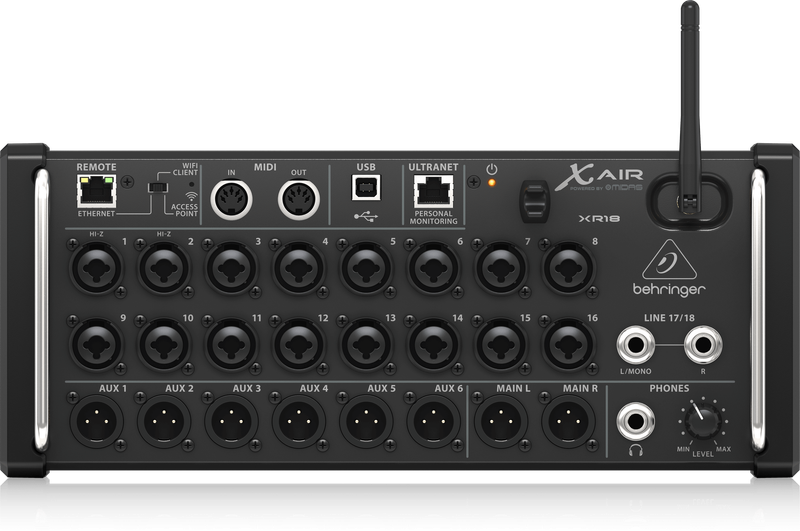
The best gear acquisition I've made in years (in praise of the Behringer XR18)
Buying synthesizers is exciting. Buying guitar pedals and amps is fun. Buying new software plugins can be a delight too. But buying a mixer? Generally, this is a utilitarian piece of gear that doesn't get a lot of notice until it's not doing something you want it to. Late last year, though, my bandmate and I sprung for a used (but very nice) Behringer XR18 and it has changed everything for the better.
Behringer is not a name that commands a lot of respect through the music industry, but when it comes to digital mixers, they do have a reputation as a practical, durable, and feature rich. A lot of venues use them. The cousin of these big honking venue boards is the X-Air series, which comes as just a little box that's optionally rackmountable.
As an electronic duo, we mix most or all of the sound ourselves, and use in-ear monitoring (another world-changing thing, btw). Sound engineers at a club don't have any idea what you're supposed to sound like. And when they don't have the familiar bass/drums/guitar setup to deal with, they can only guess at levels and will almost definitely get it wrong. So bringing your own mixer is a great idea. But why a digital mixer? Take a look at the picture of this thing. It sits in a rack on stage and has no knobs, faders, or switches. All the settings are saved internally, and if anything needs to be tweaked you use an iPad, computer, or even your phone to adjust. The notion of "set it and forget it" is actually feasible, rather than taking a photo of an analog mixer before the show and trying to ensure you're at the same levels.
Other wins?
There are 4, count 'em, 4 aux outputs. While on some mixers you might normally use those as effects sends, there are enough built-in effects that are really decent (as well as compressor, EQ, and gate on every channel) that it's not necessary. So we can run two out to our in-ears, give each of us a separate monitor mix, and still have two available for emergency mix situations (say the sound person really wants vocals separate). All outputs are XLR, so no DI boxes on stage anymore. Bonus? It's a USB audio interface so you can get a multi-track recording of anything it's mixing as long as you have a computer or maybe an iPad running Logic.
Other uses
Every year, I run sound as a volunteer for a multicultural festival and every year it gets to be more of a pain as the acts grow and their complexity increases. For the past decade or so, we've had a traditional setup:
- 16-channel stage box with a snake going to a tent in the middle of the seating area, with all the accessibility and safety challenges that a lot of cabling will bring.
- A 16-channel Mackie board (which was a significant upgrade from my old Soundcraft 12) whose last 2 channels are stereo so it actually only has 12 inputs for actual microphones. It's got one aux bus for monitor mix, and a nice USB input for the phones that some acts will inevitably bring their backing tracks on.
- A rack of outboard compressors for singers (I only have 6 channels of compression, so a max of 5 mics get it since one is used as a limiter for the monitor bus).
- A Crown amp and old unpowered wedges for the monitors — again, only one mix.
- Rented powered speakers for the mains.
What can I do next time? While the XR18 is rackmountable, its default setup is actually rubber feet that turn it into a stage box. All the mics on stage go into it, and then... that's it. No snake because the stage box is also a mixer. No board because you use an iPad. No outboard compressors because it's all in there. No outboard reverb or delay either. Just this little box... and four different monitor mixes too. Not that we'll tell the performers that. It's a volunteer gig after all.
Good things CAN happen
More than 3 years ago now, Neurosis went out — not with a bang or even a fizzle, but with a really depressing deflation. The story is a real bummer, and so one of the most important bands in the universe to me seemed to retire more or less in shame, realizing that their entire legacy was tainted by a guy they didn't know as well as they thought they did. It's amazing yet true how well sociopaths can hide in plain sight from their closest friends for decades.
But they never actually said they were breaking up. And now, in a feat that seems nigh-impossible for a band of their stature in the year 2026, they have dropped an album completely by surprise. And what have they done to fill the void? They enlisted Aaron Turner of the bands ISIS, Old Man Gloom, and SUMAC. He's approaching legendary in his own right, and ISIS was severely indebted to Neurosis in the first place. There's nobody on the planet who makes more sense.
The album, though? Man, it's good. It's really good. If you are a fan, listen immediately. And while you're at it, go around the internet and look at comment threads about this. Not something I'd normally advocate, but there is a borderline-universal joy over this.
See, Neurosis isn't just a band, even a highly influential one, to the people who love them. They're an example of how to be a band with integrity and authenticity, which is why it was so painful to see them laid low by Scott Kelly, and why it's so incredible for them to return in such a triumphant way. It's also not lost on me that it's the spring equinox today, which seems very intentional for them.
So... the world has some problems right now, to be idiotically understated about it. But you can't ruin my day because Neurosis is back.
Fugazi, anyone?
Ah, noise
I was talking to a friend and remembered a particularly impactful show from years ago. I believe the band that initiated the conversation was Lightning Bolt, but the show was called the Oops! Tour and featured them along with Erase Errata, The Locust, the Flying Luttenbachers, and Arab on Radar. It was the last one that left probably the most indelible stain on my psyche and my idea of what I wanted a live show to be (as an audience member and a performer).
They wore matching button-up black outfits, similar to Crass's, but that's kind of where any similarities end in terms of stage presence (though the noise guitar is not far off). As a YouTube commenter puts it, the guitarists seemed like they hated playing guitar — in fact the whole band seems to hate music — and they seemed on the verge of a terrible breakup-inducing fight at all times. The lights at the front of the stage cast giant shadows of the members behind them. It was goofy, ridiculous, and terrifying all at once. I've seen a lot of shows but there aren't that many I want to relive. Off the top of my head I can think of the Cramps, the first time I saw Neurosis, Butthole Surfers, Bauhaus's reunion... and this.
Here's a video from a similar time that gets the experience pretty close.
Subvert
While I’m all-in on re-decentralizing the web, there are certain places where putting a lot of the same kind of content together does make sense. For instance, a music store. But that doesn’t mean a profit-driven version of the music industry that’s even worse than the old profit-driven music industry. Yes, I’m talking about Daniel Ek but I’m also talking about Bandcamp, which is somehow doing worse than it was under the Fortnite people.
So what would an alternative look like? According to Subvert, it would be a collective. It would build slowly, it wouldn’t require endless growth, and it would have a straight-up manifesto in the form of a zine. They have a pretty solid vision for a musician-owned world of digital presence. This checks way too many of my boxes to just ignore, so I signed up as a founding musician. It's got an interesting old-school aesthetic too.
We now have our music up on the alpha site, and if you're interested in supporting me and our tunes, I'd dig it if you gave that a shot. It's hard to break through the monopolies and duopolies of the current tech world, but I'm cautiously optimistic.