The number of occasions I've heard masses of people say they're going to walk away from Twitter now numbers in the dozens over the years. The company has demonstrated contempt for the users that can be rivaled only by Meta, having pivoted many years ago from adding features based on usage (Retweets) to generally delivering weird non-features that even the advertisers don't really want (Blue).
But now it's being bought by a guy who has latched onto the "free speech brigade" not because he's particularly pro-free-speech (he's not), or because his politics align with those kinds of people (they do), but because he seems dumb enough to believe their spiel (he might be). A union-buster, an apartheid-profiter, and a guy who has used the platform that will soon be his to:
Get yelled at by a Wachowski
Libel the guy who saved that Thai sports team after nobody liked his coffin submarine idea
Predict the end of COVID-19 with the accuracy of Nate Silver picking numbers out of a hat
Generally sound like a dumbass who'd be cringey and goofy if he wasn't so simultaneously powerful
Anyway. Doesn't bode all that well. Maybe it's time.
What is Cohost? I dunno. Probably another thing that'll come and go quickly. I still get spam emails from Ello, the supposed Facebook-killer that was all in black-and-white Courier font and whose name I had to look up.
I don't know how to Mastodon despite being acquainted with its founder and signing up for many servers over the years. Somehow the email model of "different servers but everyone can talk" fails to make sense to me in a social media context.
But I use Twitter less and less every year, and these days even the months show decline. And maybe it's time for us all to stop trying to post through it anyway.
Pentagram does a snarky thing with a fun type design. Like Bierut, I wonder if any of these terms the FBI notes have ever been used by anyone. The idea of the document reminds me of the old Law Enforcement Guide to Satanic Cults. Link is to the film but its print predecessor baffled me even in middle school.
It speaks to the (uh, problematic) law enforcement mindset that there are dark forces and coded evils working in all corners of the world and they're the last bastion of defense against it. Too often those "evil" symbols are just non-WASP identifiers, and fear of youth comes from the same place — especially when so much of internet slang comes from AAVE and other non-white sources.
Framer Sites looks wild. Framer already generates pretty good HTML, and this seems to represent the final few pieces necessary to actually turn that into a functional website. And CMS features are coming soon? Finally someone's really coming for the king in a big way, for the first time since the king has been Figma.
Is this finally The Thing we've been looking for? A design tool that builds websites visually, but in a real "web-like" way? That's been an unsatisfactory process since my first job using NetObjects Fusion (which apparently is better in itself these days, using CSS grid instead of the absolute positioning it employed almost 25 years ago). Frankly, potentially exciting, although these days — as in those days — it's fun to whip up some HTML to create a nice looking site. Still feels like alchemy to me.
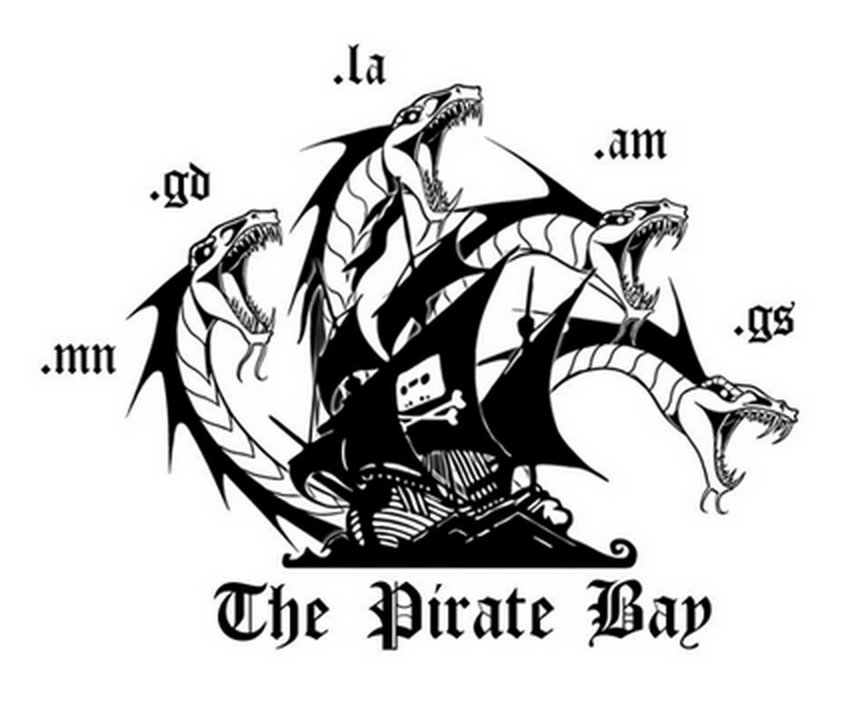
This is pretty awesome, regardless of your opinion of TPB. If you see them as sort of punk rock establishment fighters, you're bound to love the visual middle finger. If you think they're villains, well at least they're suitably entertaining ones.
wrote this for our corporate blog. Rather than give everyone I know instructions for connecting to our VPN, I thought I'd reproduce it here. The gist is: as we go through a lot of change both process-wise and philosophically, we need to make sure nobody gets too attached to one way of thinking and gets left behind.
Since its inception, the Web has undergone constant evolution. But along the way, it’s also gone through some major revolutions that left it forever changed — and left some people behind.
Purty Pitchers
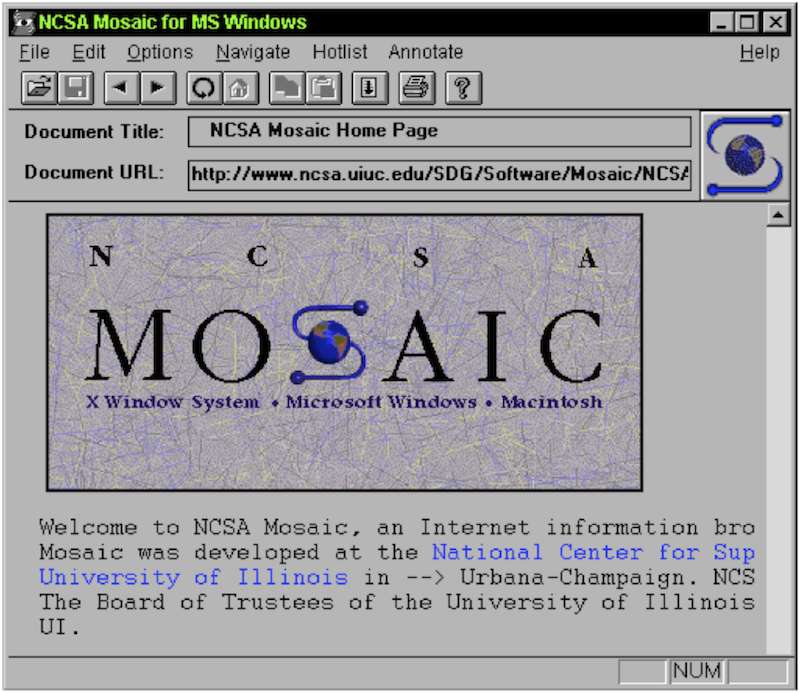
The first earth-shattering change was the NCSA Mosaic browser. Why? One word: graphics. Color graphics! You wouldn’t think this would bother anyone: sure, they took a long time to load and were really awful quality purplish GIFs for a long time, but being able to navigate around a web page with your mouse and scrollbar really opened up the web to a lot of people who would never have touched the green-on-black terminal browser Lynx.
NCSA Mosaic
Still, there were casualties: the early denizens of the internet, the super tech-savvy terminal jockeys and ASCII artists who preferred the music of a ker-chunking IBM Model M keyboard to the click of a mouse saw their little private utopia being taken away. In a way, I can sympathize. They were probably worried it’d be filled with n00bs, dads and ads eventually.
But the lesson is there. Adapt or get left behind.
The Blue Beanie
Most of these revolutions have happened during my career. The rise and fall of Flash, the advent of YouTube, blogging… it’s been a fun ride so far.
But from a designer/developer standpoint, something that in hindsight might’ve had the biggest effect was the Web Standards movement. As late as the mid–2000s, we’d been designing pages based on some anonymous genius’s realization that HTML tables and weirdly sliced images could be used to create print-like layouts on web pages. Thus the business of “web design.” But this was a hack, and it helped us grow an appetite for hacks. Meanwhile, Netscape and Microsoft were vying for supremacy in the browser market by adding more and more amazing but completely incompatible features. So we essentially had to build sites twice.
But then Jeffrey Zeldman came along and told us all to try something: first off, stop using tables, because we’re hacking a useful feature of the browser to do something awful it wasn’t meant to do, and second, stop using these browsers’ non-standard features. Start using CSS. Thus the Web Standards Project (and what has come to be called the web standards movement) was born. And this movement effectively ended those dreaded Browser Wars.
Trust me, we’re all better for it. But for a while, there were a lot of designers and developers who didn’t want to abandon their fancy browser features, and didn’t want to stop using tables because they worked! Those people adapted. Or they became irrelevant once the browser makers got on board with the Standards crowd.
Responding to Change
The arrival of web applications was not about just one thing. Faster broadband, AJAX, browsers able to run complex Javascript, web fonts, SVG, and all kinds of other stuff made the web the new platform for software. It’s still getting better. And our desktop computers aren’t the only devices with these front-end capabilities anymore. If I can get my software over the web, and my phone has a really good web browser, I should be able to run the software on my phone, right?
Ethan Marcotte first coined the term “Responsive Web Design” four years ago on A List Apart, and the design world has been pretty… responsive to it. Rather than the conversations I used to have ten years ago over whether we’re going to finally support 1024x768 screens, applications can now resize, reflow, and customize for different screens and devices. It’s a huge change in a way of thinking, but it’s also one more way that web applications are now more like “real” applications: do Microsoft Word or Adobe Photoshop force me into a highly controlled layout that only works at a certain window size?
But like the ASCII art and table layouts, there are going to be some casualties in the new way. I think the concept of “pixel perfection” is one of those. If my application changes from screen to screen and situation to situation, I can’t ever know exactly what it’s going to look like to any particular customer.
And that’s fine.
There’s still room for all the careful and highly thought out work that we’ve always done when crafting web pages and web applications. In fact, our job is more important than ever because there’s no way a print layout designer can ever do what we do: deliver what our customers need, on whatever device they need it. And we don’t have any intention of being left behind.