The best gear acquisition I've made in years (in praise of the Behringer XR18)
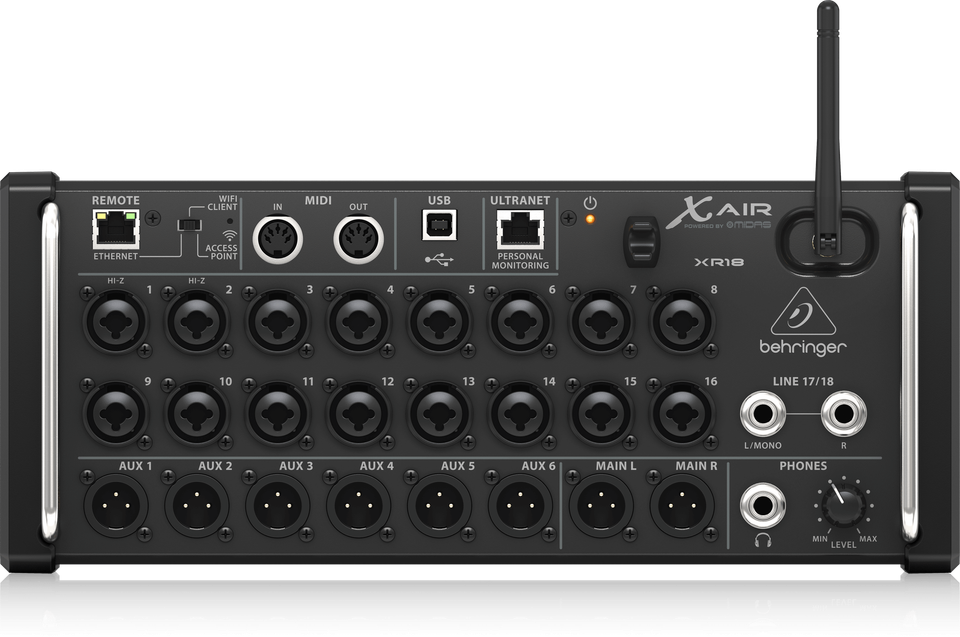
Buying synthesizers is exciting. Buying guitar pedals and amps is fun. Buying new software plugins can be a delight too. But buying a mixer? Generally, this is a utilitarian piece of gear that doesn't get a lot of notice until it's not doing something you want it to. Late last year, though, my bandmate and I sprung for a used (but very nice) Behringer XR18 and it has changed everything for the better.
Behringer is not a name that commands a lot of respect through the music industry, but when it comes to digital mixers, they do have a reputation as a practical, durable, and feature rich. A lot of venues use them. The cousin of these big honking venue boards is the X-Air series, which comes as just a little box that's optionally rackmountable.
As an electronic duo, we mix most or all of the sound ourselves, and use in-ear monitoring (another world-changing thing, btw). Sound engineers at a club don't have any idea what you're supposed to sound like. And when they don't have the familiar bass/drums/guitar setup to deal with, they can only guess at levels and will almost definitely get it wrong. So bringing your own mixer is a great idea. But why a digital mixer? Take a look at the picture of this thing. It sits in a rack on stage and has no knobs, faders, or switches. All the settings are saved internally, and if anything needs to be tweaked you use an iPad, computer, or even your phone to adjust. The notion of "set it and forget it" is actually feasible, rather than taking a photo of an analog mixer before the show and trying to ensure you're at the same levels.
Other wins?
There are 4, count 'em, 4 aux outputs. While on some mixers you might normally use those as effects sends, there are enough built-in effects that are really decent (as well as compressor, EQ, and gate on every channel) that it's not necessary. So we can run two out to our in-ears, give each of us a separate monitor mix, and still have two available for emergency mix situations (say the sound person really wants vocals separate). All outputs are XLR, so no DI boxes on stage anymore. Bonus? It's a USB audio interface so you can get a multi-track recording of anything it's mixing as long as you have a computer or maybe an iPad running Logic.
Other uses
Every year, I run sound as a volunteer for a multicultural festival and every year it gets to be more of a pain as the acts grow and their complexity increases. For the past decade or so, we've had a traditional setup:
- 16-channel stage box with a snake going to a tent in the middle of the seating area, with all the accessibility and safety challenges that a lot of cabling will bring.
- A 16-channel Mackie board (which was a significant upgrade from my old Soundcraft 12) whose last 2 channels are stereo so it actually only has 12 inputs for actual microphones. It's got one aux bus for monitor mix, and a nice USB input for the phones that some acts will inevitably bring their backing tracks on.
- A rack of outboard compressors for singers (I only have 6 channels of compression, so a max of 5 mics get it since one is used as a limiter for the monitor bus).
- A Crown amp and old unpowered wedges for the monitors — again, only one mix.
- Rented powered speakers for the mains.
What can I do next time? While the XR18 is rackmountable, its default setup is actually rubber feet that turn it into a stage box. All the mics on stage go into it, and then... that's it. No snake because the stage box is also a mixer. No board because you use an iPad. No outboard compressors because it's all in there. No outboard reverb or delay either. Just this little box... and four different monitor mixes too. Not that we'll tell the performers that. It's a volunteer gig after all.