
All postsEXPLORE TOPIC

#Novation Circuit

Apples to MPCs

If you've ever spoken to an electronic musician or a guitarist, you know that GAS (Gear Acquisition Syndrome) is a chronic disease. And though it can be treated, the results tend to be temporary.

The issue, aside from the obvious financial ones, is that gear can never actually solve your problems. That's what all the pros say, anyway, but who can trust them? They have really nice gear.

The real issue, at least as I see it, is that so few pieces of electronic music equipment can be compared in an apples-to-apples sort of way. Guitars? Sure. Tone-chasing is a thing, and a neurosis that's even worse than GAS, because it can cause you to hoard dozens of distortion pedals, claiming they all do different things. But are they all objectively distortion pedals? Yes.

Are a Roland SP-404MKII, an Akai MPC, a Novation Circuit Rhythm, a Korg Electribe Sampler, a Polyend Tracker, and an Elektron Octatrack objectively the same thing? Sort of. They are samplers with sequencing. Most are capable of sequencing external machines via MIDI. Most store samples on an SD card. But it stops there. They range from around $350 to about $1500, and that's not just the honorable Swedish pedigree that's giving Octatrack that kind of price tag. They have varying amounts and quality levels of built-in sounds. There are wide ranges in connectivity and numbers of tracks. Some are more sequencers with sampling capability, others are samplers with just enough sequencing to make you think it's an all-in-one device. Some are very good at both. Some have no screens, some are basically computers in a box. You get the idea.

So, in a live set, to replace Circuit Rhythm and Circuit Tracks with an MPC One is more or less an even trade in terms of whether the same stuff I've been doing is possible. But what else is possible? Turns out, a great deal. More on that another time.

Am I going back on what I say in this post by replacing the Circuits as the centerpiece of live work? Not really, because I'm not thinking of it as an "upgrade." I still think that they are the most beautiful, elegant, and fun quick-composition machines out there, especially the Tracks. But that's not to say that another device doesn't have a place in my show or in my life.
Discuss

In praise (and defense) of the Novation Circuits

Pretty regularly on the Novation Circuit subreddit, a question like this or a comment expressing the same general idea appears. I'm not familiar with any other music gear subs where the users are so often actively trying to get away from their chosen devices.

The Circuit OG/Tracks/Rhythm are very interesting devices. Novation took the success of the Launchpad, an Ableton clip launch controller, and expanded it into a standalone device that really isn't like anything else. There's no screen. The pad grid serves as the user feedback for every function: step sequencing, keyboard, pattern launching, mixing, even the tempo display. That makes it a device that sometimes needs a great deal of memorizing (or RTFM, initially). But it also makes it a device that absolutely nails what it means to be immediate and tactile — attributes that screen-poisoned musicians supposedly crave these days when they step away from the DAW. There's no clicking, no menu diving, no using a scroll wheel to name a pattern. There's you, there's the buttons and knobs, and there's the music. And trust me, it's extremely quick to get to the "music" step. Features of both current-gen Circuits include one-button "scene" launching, sequencer probability and random mutation, pattern chaining for very long variations, and really usable reverb and delay.

So why does everyone think they need to "upgrade" to an Elektron machine, an MPC, or god forbid a Roland MC-707?

Cheap...

Firstly, these things are not expensive. About $350 gets you a new one, and for better or worse this "gotta upgrade" attitude leaves Reverb stocked with them for much less. I think there's an attitude with all kinds of musicians that the more you spend, the better your stuff is. Surprise! That's bullshit. It's not that I'm that old blues lawyer guitarist insisting that "tone is in the fingers" — after all, these same people are connecting 1958 Les Pauls to Dumble amps via Monster cables.

What I mean is electronic musical instruments are very rarely apples-to-apples comparisons. They all have their strengths and their frustrations. And good stuff has never been cheaper than it is right now.

And unspecialized...

The second thing is that, possibly because of said price, no pros have decided that these things have a certain space. If you want to make hard techno or dancey industrial, people like NIN and Richard Devine have sold you on Elektron machines and their hyped, exciter-pumped sounds. If you make lo-fi or boom bap, you want an SP-404 because Madlib, J Dilla, Flying Lotus, and who knows who else used one to make their iconic material. Even doofy gear gets this treatment at times, like the really uninspiring Microkorg being anointed the "synth for an indie rock band that has a synth."

What is the Circuit's space? It doesn't have one. I wouldn't say it's a "master of none" because it's quite good at plenty of things, but looking at it you don't say "ah yes, this thing is for X."

First composition with both Tracks and Rhythm
by u/vrsrsns in novationcircuit

Just like me.

What I can say about the Circuits, especially the Circuit Tracks, is that they are now my centerpiece for both performing and composing, and in 20+ years of making live electronic music I have not owned another machine that enabled my way of working so thoroughly.

Would I like more precise sample cutting onboard? Yeah probably. What about separate outputs? Always want those. But "missing" features like these imply that the very purposeful design of these devices somehow includes more mistakes than it actually does. And the sum of the features versus tradeoffs is unlike anything else out there for both utility and (gasp) fun. So I'm not sure that an upgrade would actually be one at all.

Discuss

Bob Moog and usability heuristics

Here's a rare intersection of my interests. This is actually a great article for UX folks who don't know anything about synthesizers.

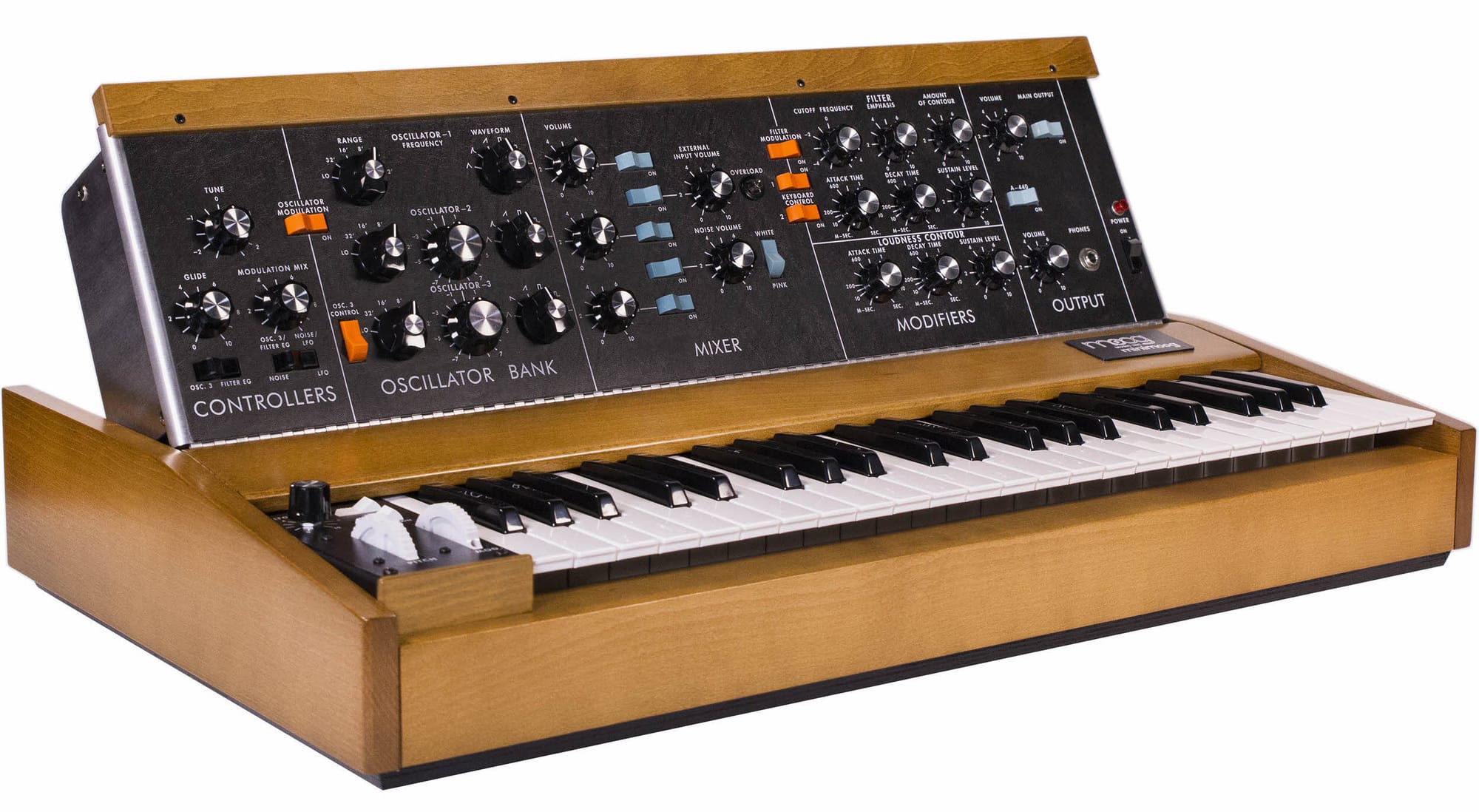
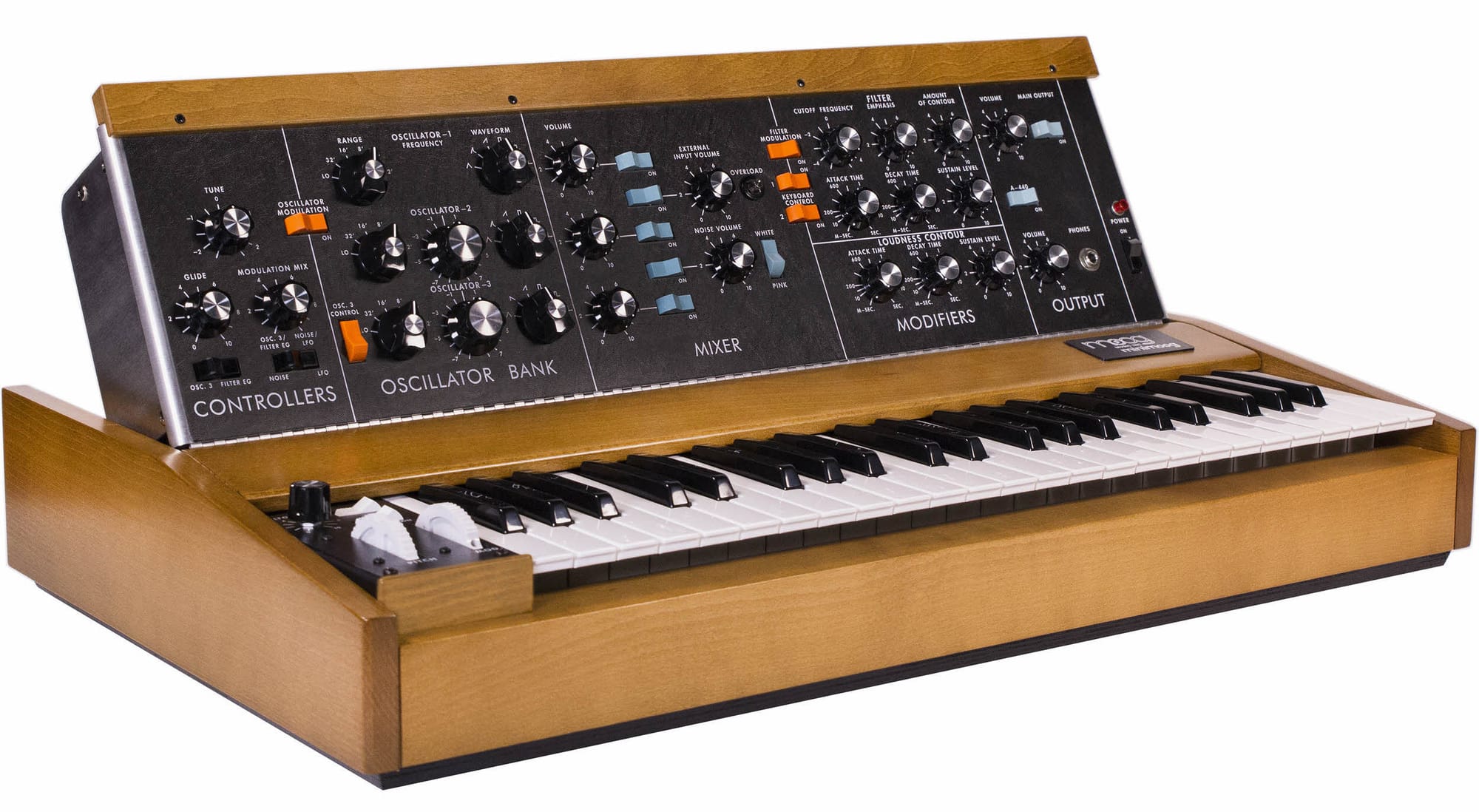
The author makes the (accurate) argument that Bob Moog changed the game by hard-wiring some signal paths and abandoning the fully customizable cable-based routing of modular synths.

This is essentially what Apple did in terms of UI as well that led to their early success:

  1. Preset the red routes.
  2. Enable other routes with some switches that are not part of the main UI.
  3. Just abandon the ability to do some things that most users won't need.

That made Apple popular with artists, designers and musicians, just as the Model D became the first synth truly popular with a wide range of musicians. Sure, the Rick Wakemans (and Linus Torvalds) of the world might want more, but they have their complicated alternatives. For the rest of us, it was finally time to make music with synths. Just watch any gear-focused interview with John Foxx, Gary Numan, George Clinton, Rick Wright, you name it — the Model D hugely influenced their worlds so they could influence the rest of the world.

This philosophy can still be controversial at times, as with GNOME 3 (which, incidentally, has become less loathed in the years since its release), but in general the idea of solving for the 90% of users who don't need 50% of the features is considered an obvious one nowadays.

Of course, modulars have seen a resurgence lately because once you're in deep you inevitably want to start making your own synths. But that hasn't stopped the steady stream of simplistic analog boxes like the Volca series or Behringer's slavish old-school synth imitations. Options are great, but menu diving is no fun and the quickest way to get a musician to love your instrument is to get them creating quickly.

And this, as the article gets across pretty well, is what we should learn from Moog.

Apple would've patented the pitch wheel though.

Discuss