All postsEXPLORE TOPIC

#music

Making it, listening to it, recording it, all that

Kraftwerk at the Masonic Temple in Detroit

Some musical acts who get long in the tooth sustain themselves through constant reinvention, like David Bowie. Others, like Iron Maiden, keep their old hits from sounding tired by pushing themselves to make great new music. And plenty (Springsteen, the Stones) keep flying by on the strength of their live performance regardless of the weakness of their current output. Kraftwerk manage to grab the best parts of all of these by continually refreshing their classic music.

We traveled all the way to Detroit for only a long weekend, and it was basically just to see Kraftwerk. How many more tours do Ralf Hutter and the gang have in them? I don't want to be on the wrong end of that question, having never seen them. Pete told me their shows were boring. Kris told me whatever, the visuals are good and you know all the songs. This is pretty right-on. The visuals, this time in 3D, were a fantastic future-retro mix of graphics and video all completely synced with the tunes.

They started with zero buildup, launching into "Numbers" so fast that much of the theater hadn't gotten seated. They updated the beat that launched a million electro singles into a super powerful, booming dance assault. Apparently Kraftwerk's people enter a venue, evaluate it, and supplement the sound system wherever necessary. And it shows. The sound was powerful but pristine.

The process of updating the songs began with The Mix, but they now sound even better — the beats have The Mix's dancefloor focus but the sounds and synths feel more like ultra-high-fidelity versions of the originals.

Here's a not-great but not-distorted phone clip of "Radioactivity," possibly the most dramatic update.

Ironically, the largest response came for the beginning of the second set, "The Robots." It's ironic because the applause was for the old-school Kraftwerk "robot" mannequins, who took the stage instead of the members. The rest of the time, the group wore uniforms I can only describe as Tron-like, which lit up to correspond with each song's projections.

Overall, a great show and a great classic Detroit venue to see it. It makes an all-day trek with a near-3-year-old just about worth it.

Discuss

In Every City? Wire's Drill

When I was in high school, I had a friend who shrugged off the idea of Wire records after 154, because they "started doing techno or something." That's narrow and inaccurate, but that's how we thought. And anyway, though they used synths the music was more like a left-field pop — and the "p" word is even more damning than "techno."

The inspiration for my friend's comment, though, may have been a "single" that Wire put out during their second phase. The song is "Drill," from The Ideal Copy. It features no less than 9 different reworkings, remixes, and live performances of the song that often bear no resemblance to the original. It's a fun release that hangs alright on its own because the versions are all different. Here's one.

Some of the versions are very industrial in tone, with processed vocals, textures made of samples, heavy programmed beats, and an almost-danceable pulse.

If you knew me at the time I owned the cassette, you were probably subjected to The Drill repeatedly in my Dodge Spirit. I apologize, but only a little.

Discuss

In praise of the Alesis SR-16

I was somewhat surprised recently to see that some people on the group-buying site Massdrop were attempting to get a group together for the Alesis SR-16 drum machine. At its regular street price, the SR-16 is at the same price point as a lot of other newer, more fashionable machines. The Volca Beats is an insanely fun, great-sounding, compact true analog 808 clone for the same coin. Boss continues to make good drum machines for the same or not much more.

And recently I've been in multiple conversations about how the Alesis brand is mostly garbage. This is a shame, at least for the sake of a few great machines — The Micron/Ion keyboards are among the best synths to come out of the now-passé virtual analog era — but most notably for the SR-16. It's somewhat hard to love, but it's also hard to deny.

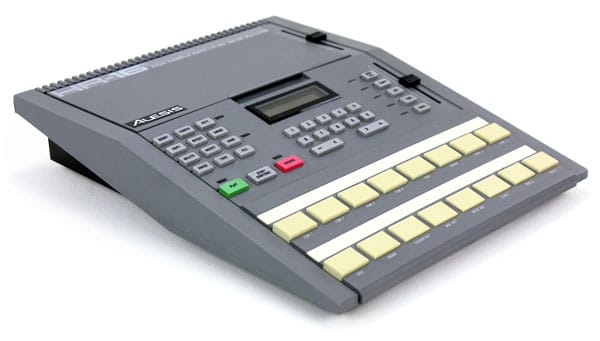
HR-16

Alesis produced the very first 16-bit sampling drum machine, the HR-16. Previous sample-based machines, like Oberheim's DMX and the Linn LM-1, were 8 or 12-bit. "HR" stood for high resolution and it really wasn't a pose. The samples were good, they had multiple velocity levels, and they were tunable. But there was, as with all machines of the time, a single kit worth of sounds to choose from. I use one, and I replaced the internal chips with Linn LM-1 sounds.

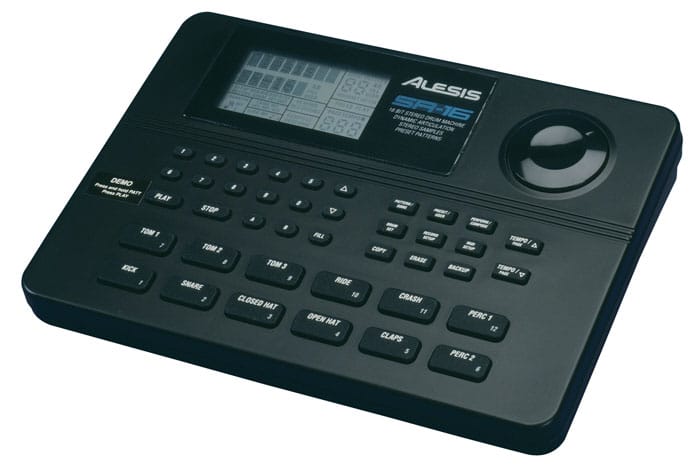
SR-16

Fast forward to 1993, and the successor to the HR-16 didn't do much for innovation, but it added every feature you might want in a drum machine. There were velocity-dependent samples: if you hit a pad harder you'd hear a sample of a drummer hitting the drum harder, rather than just the same sample at higher volume. There were two drum "fills" for each pattern, so that switching between patterns was less robotic and more realistic. For live standalone users, there were two foot pedal inputs for changing patterns hands-free on stage. But if you wanted to use the unit as a sound module, the MIDI implementation was more complete than anything on the market. Godflesh upgraded their HR-16 to an SR-16, and I started playing fairly Godflesh-like music with one, recording my ideas to 4-track. It also powered my first industrial/experimental band for quite a while before finally giving up the ghost after about 10 years of beats (I still have it and I'm sure it could be made operational again). But as long as it lasted and as useful as it was, I'm surprised that it's still made. More power to it.

Discuss

Black metal campaign logos

This is great. Fast Co gets metal logo designer Christophe Szpajdel to redesign the logos of all the bazillion players in the 2016 campaign.

The other interesting thing about this is that one guy designed all those unreadable black metal logos, from Gorgoroth and Emperor to Wolves in the Throne Room.

Discuss

Heresie

I stumbled on this a while back when I was big on reading mp3 blogs. In the few years since I regularly trawled those sites for the mysterious and bizarre gems they posted, many of the really sought-after pieces have been reissued.

For the “Rock In Opposition (R.I.O.)” bands of the 70s, King Crimson was just too simple and pop-oriented. R.I.O. were progressive rock bands from England and Europe who packed so much complexity into their music that the standard prog fans wouldn’t touch them. Their audience consisted of avant weirdos, industrial heads, and fans of more experimental stuff, and their membership was as varied as Henry Cow and This Heat.

Belgian chamber rock band Univers Zero were one of the most intense R.I.O. groups, and Heresie is the best and darkest of their work. It’s sonically dissonant and very, very oppressive sounding in both its density of notes and darkness of mood. Perfect lights-off, scare-yourself music.

Discuss

Bad townies

On the way to work this morning, I heard Op Ivy's "Bad Town," and I realized two things:

  1. It is objectively the worst song on Energy.
  2. Tim Armstrong's obsession with both rap and violence, which came to a head with his and Travis Barker's awful group the Transplants, is nothing new.

Not going anywhere with that. Just thinking.

Discuss

Wub is in the air

This weekend I was buying cables in Guitar Center and they had just the most terrible sounds going in the pro audio department, maybe even worse than the sounds that are always coming out of the guitar department.

It was a fairly generic female singer doing some kind of singer-songwriter, almost-pop ballad stuff, but over the most obnoxious Skrillex-style American dubstep.

I like James Blake but I just can’t imagine anything more incongruous than the blaring wub-wub with the mellow vocals, it’s like a DJ randomly mixing two records with no regard to content.

Does anyone have any idea what this is so I can avoid it in the future?

Discuss

Mainstream success is super imminent

✏️
UPDATE: About a year after I posted this, we were already done, though we probably played more shows than the other Make-a-Band groups. I did, however, go on to form An Empty Room with David the drummer, which lasted until he moved to Switzerland. I'm also still in touch with the band "producer" Mike. It was, all in all, a great thing to do.

Life since the move is mostly an endless series of boxes, but I have managed to get myself embroiled in one of the weirdest artistic situations of my almost 20 years of playing music.

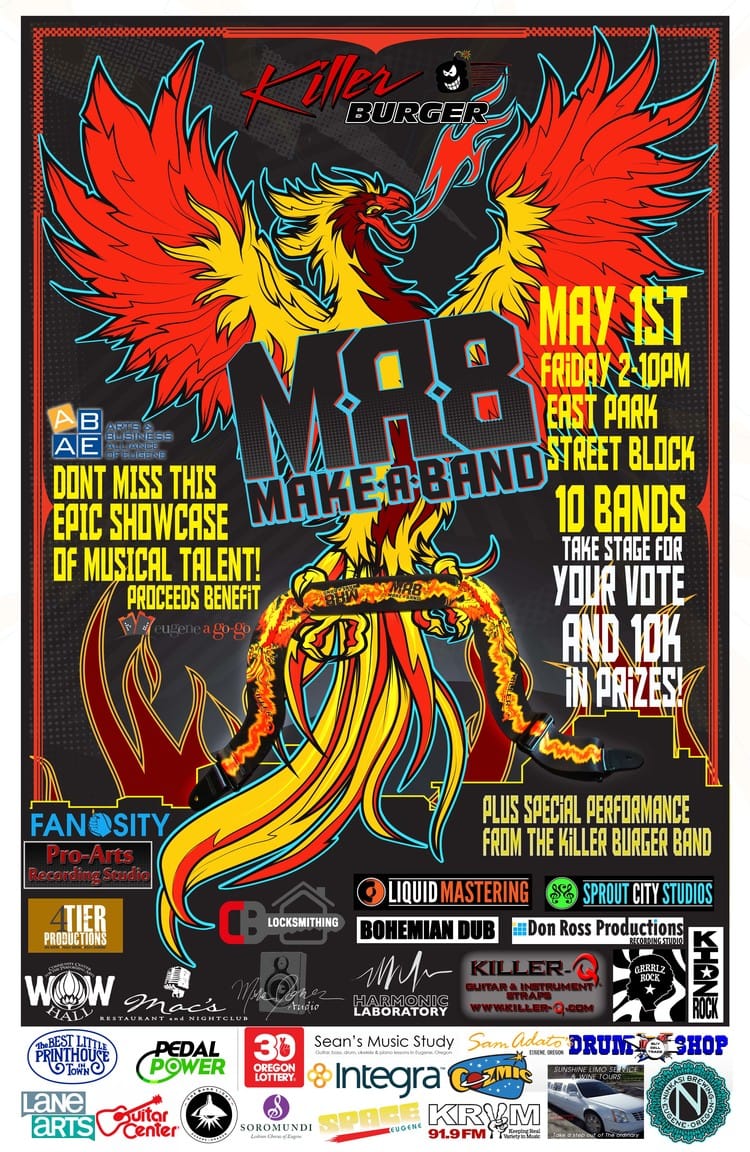
I'd seen the Make-A-Band posters around town but hadn't really given much thought to what it even was. Erika saw an ad in the Eugene Weekly and convinced me that I was sufficiently musical and lacking in dignity to do it. So what is it? Basically, a bunch of musicians audition for 6 producers, who pick them to form 6 bands. The bands then perform in a competition.

Make-A-Band Poster

The producers are local studio owners, record engineers, and (in the case of the ones who picked me) people in the business of video game scoring. The auditions are 3 minutes. And the competition is downtown, outdoors, for the whole damn ass world to see.

Even with Sharks, I don't feel like I ever took traditional, above-ground routes to musical performance and networking. It was always the DIY, punk rock thing — which of course in Austin is the only way anybody manages because it's a "who you know" situation and I've rarely known anything or anybody. But regardless of how this thing turns out, I've met some like-minded people and many of the folks making the Eugene music scene tick.

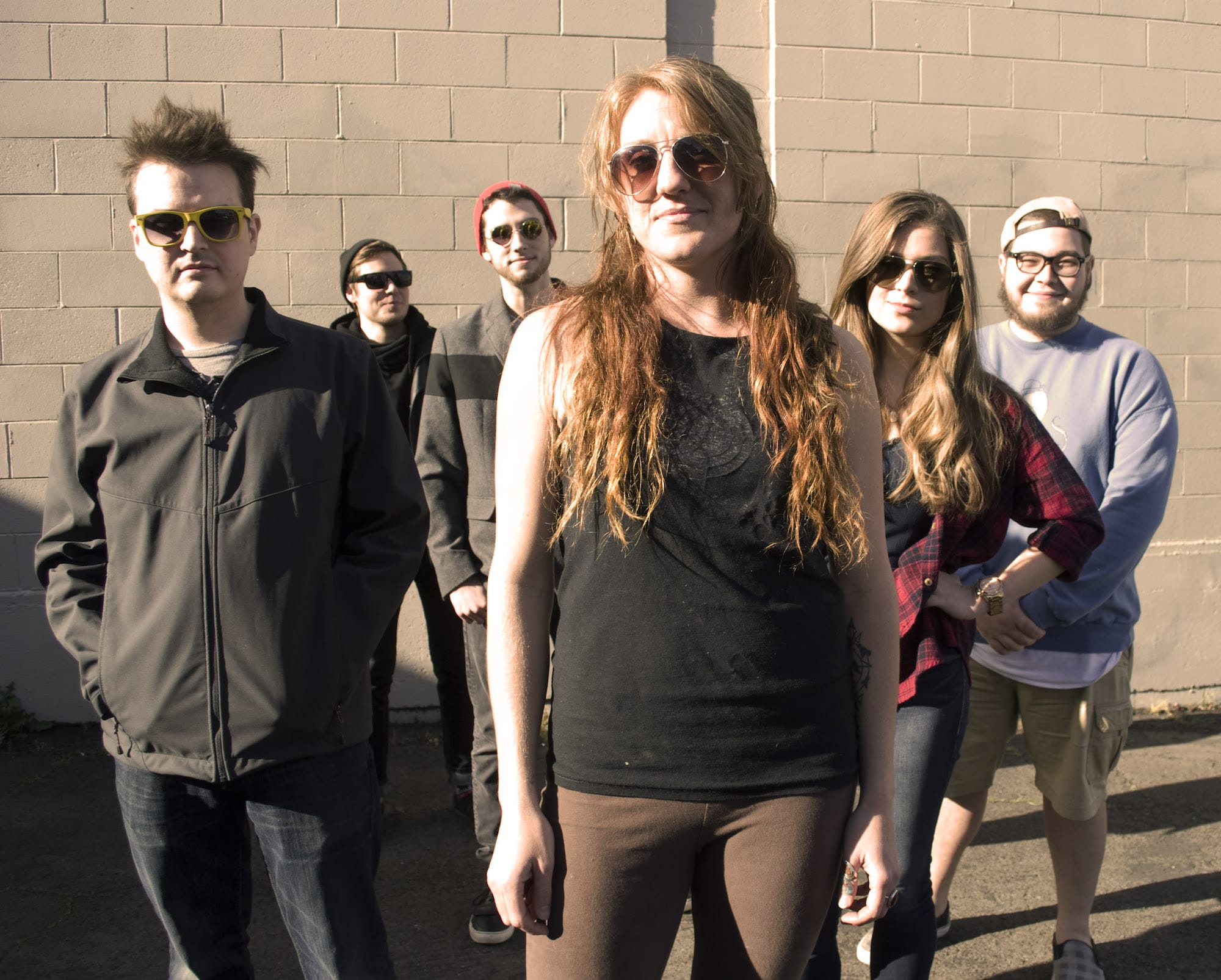
So here's the band, Gravity Nocturne. We're doing a jazzy, updated take on trip-hop. We're also all like 21, except me.

Gravity Nocturne

Don't worry, I'll be back to playing for nobody soon.

Discuss

RIP to Stan Freberg

I'll be honest, I wasn't sure that Stan Freberg was still alive when I heard the news he'd died yesterday (from Weird Al Yankovic's Instagram). But I spent a great deal of my childhood listening to him, thanks to my parents' taste for vintage comedy.

Of all the things that played in our house — like Paul Simon or Dave Brubeck or Louis Armstrong — Spike Jones and Stan Freberg stand out. Simon's inscrutable lyrics are not something a kid can identify with. But if you're even remotely aware of Dragnet, then Freberg's "St. George and the Dragonet" is a hoot.

So maybe I get just a little extra sad thinking about Stan Freberg than the average celebrity death. My mind free-associates his voices and sketches with my mother. But at the end of the day, his work is funny. It's clean, but not cheesy. It references pop culture of its time, but feels timeless.

Check out the entirety of his radio show on the Internet Archive.

Discuss

My favorite recent mixing plugins

The plugins I've been using lately have changed dramatically from when I started mixing. Sometimes I'm guilty of buying into hype, but I've started to discover what I like. And I'm always waiting for it to go on special...

Criteria

So what makes a good plugin? For me, it's less is more: less options, less possibilities to twiddle, and less graphical EQ curves. Sight is a strong sense, and it can fool even an experienced ear.

EQ

PSP Audioware McQ

This 4-band plus high/low filters isn't a true analog modeler, it's a hybrid. But it sounds great, is easy to use, and doesn't hit your processor hard. So really, it's safe to put on just about everything. Its bands are hard to read (Why is it ".10kHz" instead of "100Hz"?), but they're highly controllable. So you can do both broad strokes and somewhat detailed surgery.

Waves API 560

Under ideal cirumstances I'd have the whole Waves API 500 series bundle, but this one went on sale. It's fun to have a graphic EQ sometimes, especially one with only a few bands. It sounds great on a wide variety of sources too.

Waves Scheps 76

Another modeler, this one after a console. The gimmick is the integrated preamp. The bands aren't fixed on this EQ but the knobs have huge steps so you can only dial in a few possible frequencies each. The Qs are not variable. It sounds great on drums, especially kicks. Given those few bands, it's easy to crank the 60Hz and then throw one on the bass and drop the 60Hz there so they don't fight. The preamp section can add smooth overdrive to the bass as well.

Maag EQ4

An incredible EQ. It's got four fixed bands, a fixed Q, and some frankly weird frequency choices. But those bands were supposedly picked to cause the least amount of phase effects. It sounds absolutely magical. It's possible I bought into the hype with this one, but I got a deal and I can't say I feel any regret. I do feel almost guilty using it though; it requires barely any thought to make vocals, acoustic guitars, and even some drums sound amazing.

Nomad Factory PulseTec

Nomad Factory is the Rodney Dangerfield of plugin companies. I'm not sure if this thing sounds remotely like a real Pultec but it goes on all my master busses. It was completely bonkers to me at first to be able to simultaneously boost and cut the same frequencies, but man it does the trick. Not great on the top end (the Maag can handle that), but it thickens and tightens mids and low-mids.

Tokyo Dawn Labs SlickEQ

Another super transparent phase-free EQ, but this one is geared toward the master buss and costs nothing.

Dynamics

Waves CLA-76

I waited a great long while for this to go on sale. I've always wanted an 1176 that wasn't the Bomb Factory BF76 that comes with Pro Tools. It's everything I wanted it to be and I use it everywhere — primarily drums but it'll tame a problematic source quickly and with character. At its full price, it probably still wouldn't be bad.

Waves Renaissance Axx

I wonder how many people use this thing. I mean, everyone's got the Native Power Pack, right? But Renaissance Axx is one of those tools that feels like cheating. Just slide the threshold down and watch it magically even out guitars and basses. It uses so little processor I get pretty generous slapping it on guitar tracks. I've heard a few pros cop to using this thing and why the hell not?

T-Racks Opto Compressor

IK Multimedia is another company that gets a lot of poop from people. But I've had their opto compressor for a long time and it's one of my favorite tools for vocals. It can open up a weak track by an inexperienced vocalist who's all over the place or who didn't project. You can get miles of compression out of the thing with much more transparency than an 1176. Sometimes I'll double a difficult vocalist's track, overdrive it, crank the mids and highs with a smooth EQ like the Maag, and then flatten it out with this compressor. Mixing in a little bit of that adds presence and is probably a super old trick not worth mentioning. But this is a good comp to do it with.

Tokyo Dawn Labs Kotelnikov

I'm still learning this feedback compressor, but it's smooth and transparent. You almost have to watch the meters to see that it's compressing, but it can make the master buss sound great. And though you can spring for the "Gentlemen's Edition" (?), the basic version is super great and costs zero dollars.

DDMF The Strip

This is actually a full channel strip so it's both and EQ and compressor, in switchable order. It has a Neve look and that's the starting point for the modeling. But this amazing plug goes a little farther into original territory than most models. DDMF is one of the few developers who can get away with charging next to nothing for plugins yet still get respect from GearSlutz. I got it for $30 as a launch special and I'm crazy impressed. Even the knob motion reveals just how much thought went into this. The developer is also a mixer, and it shows.

Flux Bittersweet

Sometimes you need simple transient shaping that'll get the job done without interfering with other dynamics processing. How's one knob? How's free? It sounds nice too.

Other Stuff

Blue Cat Patchwork

The Blue Cat folks make some great stuff. This is a simple but flexible plugin chainer that gives me solid performance loading VSTs or AU plugins into Pro Tools. DDMF's Metaplugin would also do the trick, probably very nicely as well.

Blue Cat FreqAnalyst and IK T-Racks Meters

With these two free metering tools, I can monitor what my sound "looks like" for the low cost of free.

Discuss