Few pieces of gear are, on their own, really inspiring. Even the worst gear has its merits, but even the best sounding stuff isn't enough to be a wellspring of creativity. Ableton Live comes to mind, as well as the truly unique Novation Circuit, a cheap groovebox with no screen that I love almost as much as a family pet.
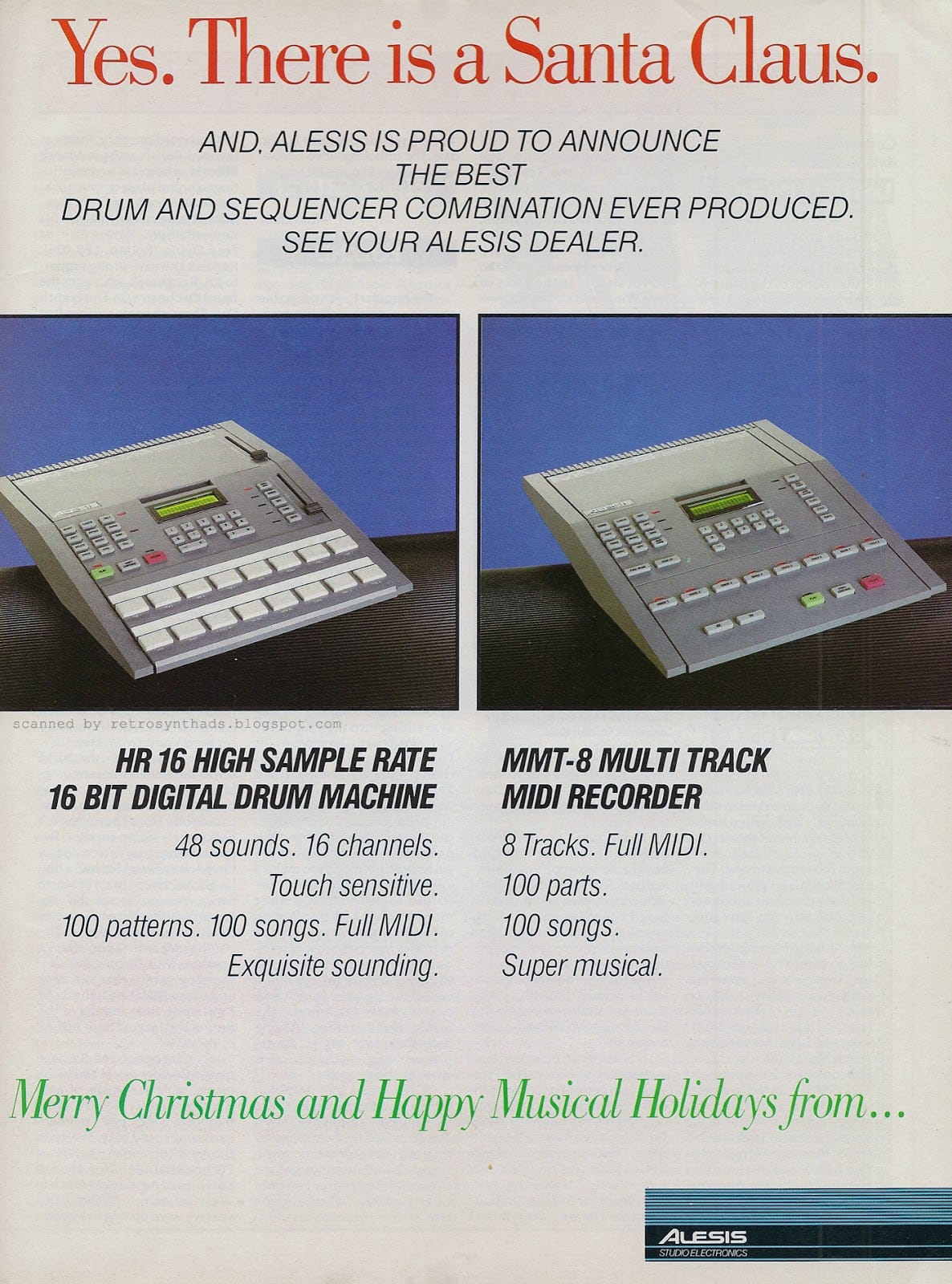
Lately I've been digging an old school piece of hardware that probably sounds the least likely to fall into this category. The Alesis MMT-8 is technically not a sequencer, but an 8-channel MIDI "recorder" and playback machine. It really does work a lot like an 8-track tape machine, but with MIDI data instead of audio. That means that it can control up to 8 devices by either playing notes, triggering their own sequencers, sending program change, and transmitting CC data. It's become the central master of my setup, and though it has its faults, it's so refreshing to get away from the computer for real that I'm itching to get on with writing new music.
It's a strange design that could only come out of the late 80s, like Knight Rider. It shares the lazer-zap shape with its brother the HR-16 (precursor to the most successful drum machine of all time, as well as the strange flip-up panel on top that contains an abbreviated user manual. Oddly, that shape does have the advantage of fitting a Korg Volca really nicely.
The first "issue" with the machine is that it doesn't have a very accurate clock. It's slow by about a whole BPM. If you want to be tempo-accurate, you need something else to send the data. On its own though, it has a pretty solid clock, though it purely transmits what was recorded into it, so if you want some unique feel or timing with "character" you'll need to trigger other sequencers. I'm just dreading when I play a show and someone comes up to me to say "I bet you thought you were playing at 74 bpm but that was really 73." They're out there. I'm sure of it.
The one workflow issue it has is a lack of overdubbing. If, for instance, I want drums and hi hats to be on the same track, I have to play the whole mess at once. Potentially a challenge, and more or less impossible if I want some kind of CC data at the same time. So those have to go on different channels. That being said, I have yet to feel like I need more than 8 channels. And when I do, I'll probably just find another MMT for about a hundred bucks. It does have extremely detailed editing capability as long as you're willing to do it on a 2-line LCD screen with squishy rubber buttons.
It's remarkably fast and intuitive once you're in there, and that has always been the most important thing to me in a creative tool. Get me punching in notes and feeling the song, not thinking about how a thing works. And it's rare to get that along with the immediacy of hardware.
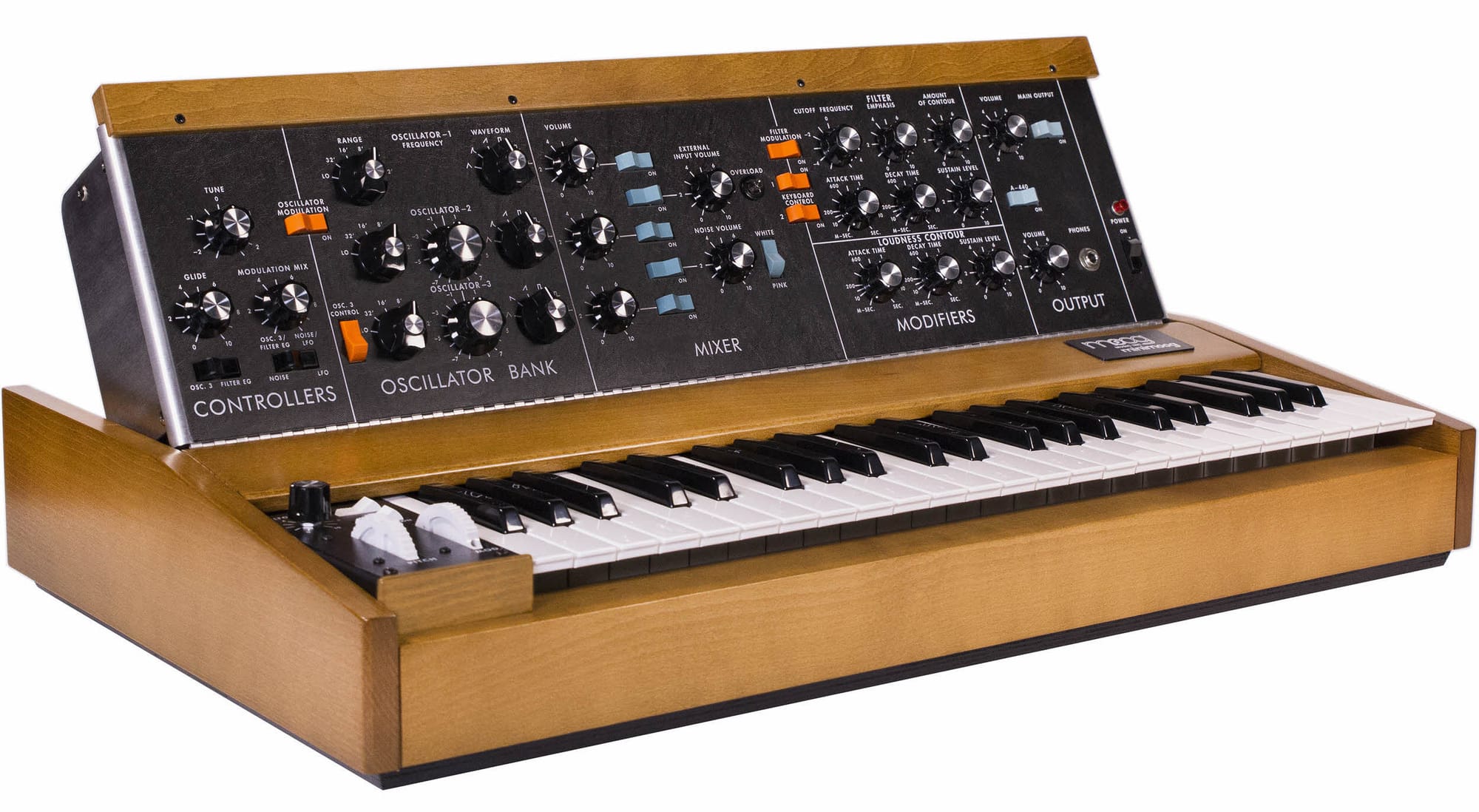
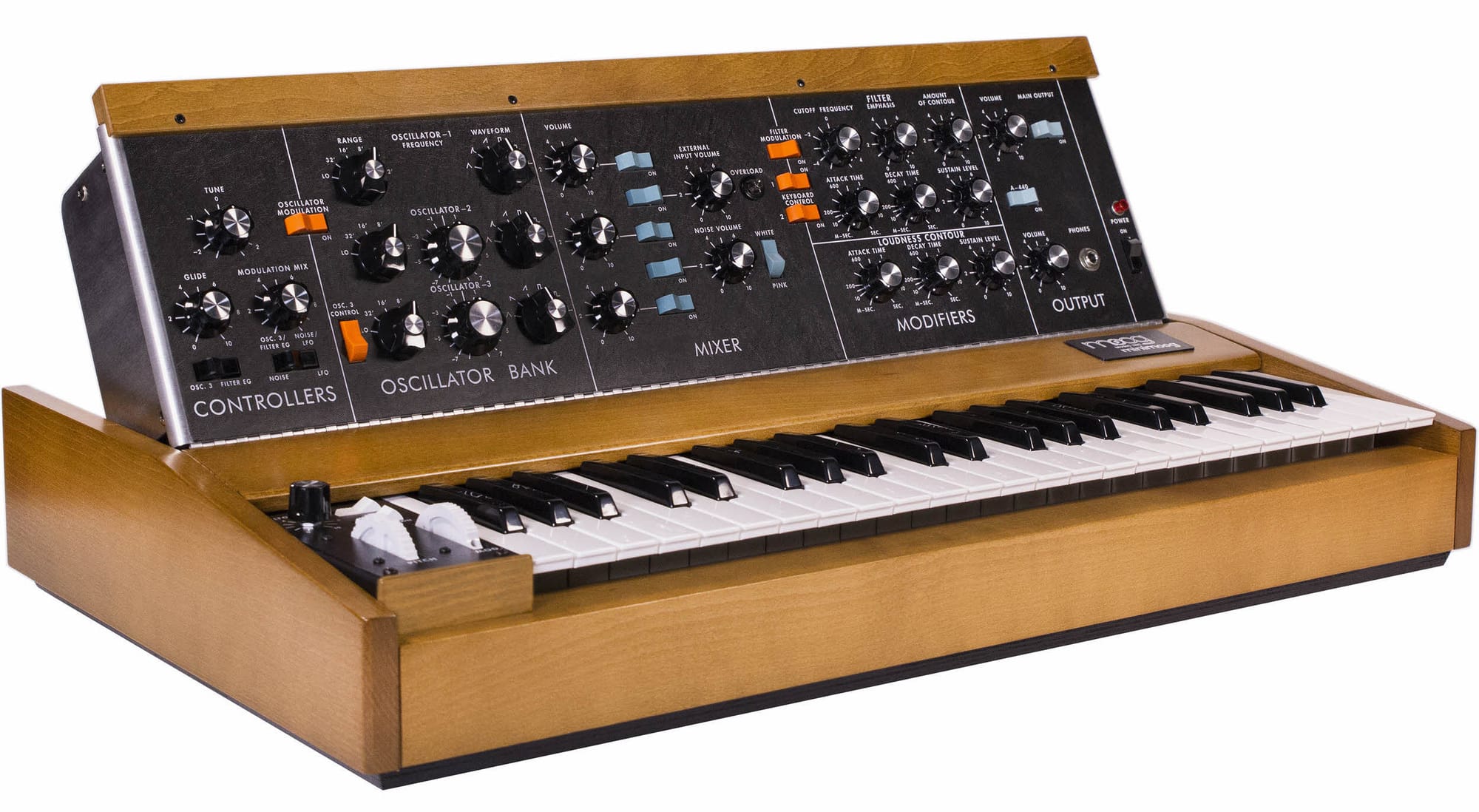
The author makes the (accurate) argument that Bob Moog changed the game by hard-wiring some signal paths and abandoning the fully customizable cable-based routing of modular synths.
This is essentially what Apple did in terms of UI as well that led to their early success:
Preset the red routes.
Enable other routes with some switches that are not part of the main UI.
Just abandon the ability to do some things that most users won't need.
That made Apple popular with artists, designers and musicians, just as the Model D became the first synth truly popular with a wide range of musicians. Sure, the Rick Wakemans (and Linus Torvalds) of the world might want more, but they have their complicated alternatives. For the rest of us, it was finally time to make music with synths. Just watch any gear-focused interview with John Foxx, Gary Numan, George Clinton, Rick Wright, you name it — the Model D hugely influenced their worlds so they could influence the rest of the world.
This philosophy can still be controversial at times, as with GNOME 3 (which, incidentally, has become less loathed in the years since its release), but in general the idea of solving for the 90% of users who don't need 50% of the features is considered an obvious one nowadays.
Of course, modulars have seen a resurgence lately because once you're in deep you inevitably want to start making your own synths. But that hasn't stopped the steady stream of simplistic analog boxes like the Volca series or Behringer's slavish old-school synth imitations. Options are great, but menu diving is no fun and the quickest way to get a musician to love your instrument is to get them creating quickly.
And this, as the article gets across pretty well, is what we should learn from Moog.
I suppose I was fortunate, really. My band's drummer, who also wrote maybe 70% of the guitar riffs, finished his PhD and left the country to go work in Switzerland. Writing out that sentence makes me realize he was the really fortunate one. But what I mean is, a lot of my musician friends had to deal with the fact that they couldn't get together during the pandemic. For better or worse, I didn't have a band anymore to worry about. Fortunately, prior to 2020 I'd released about a dozen releases (between digital, CD and cassette) over the past 20 years that featured no other musicians but me. So I started to hit the shed.
I've been a process musician for most of that time. Each project, each release, is the result of a way of working. It comes from being in the experimental world for so long. Now, even when I make something that I find enjoyable to listen to, it's still gonna be made via a specific process. And when I make something with that process, I tend to move on. But that kind of indulgence is tough for someone with kids and a day job. Movement doesn't happen quickly enough, and output is minimal.
So I came up with the plan of forcing myself into the shed once a week, and I decided I wasn't going to come out of the shed until I had a finished song. Talking it out with a friend, I realized this accomplishes a few things:
It opens the throttle on that speed of progress. If you just "play around" once a week for a couple hours, you're not going to get anywhere for a long time. Validating an idea once a week gets you through the ruts and the familiar patterns and into new ideas sooner.
It keeps you from being precious about polish and "finish." The dumb truth of a piece of music or art is that it's finished when you say it is. Bee Thousand is just as "finished" as Dark Side of the Moon, and they're both classics of their space. One was made by a group of guys with infinite time and money, and the other was made by a drunk schoolteacher with kids.
It makes you go with your gut. Maybe if I hadn't been doing this for close to 25 years, I wouldn't feel like the gut was a useful thing. But the gut has become experienced.
I'm currently using this process to create new Various Reasons tunes, always with the further constraint that someday they can be recreated live, but the first work I did with a "live band" style and put onto Bandcamp as Mezzo Cortex.
Like any mediocre guitarist, I spend a lot of time rethinking my tone and my pedalboard. Like any experimental musician who likes to turn guitars into other sounds, I spend a lot of time trying to balance versatility and ease of use. Nobody likes to tap dance one-footed, even if you can perform an entire symphony.
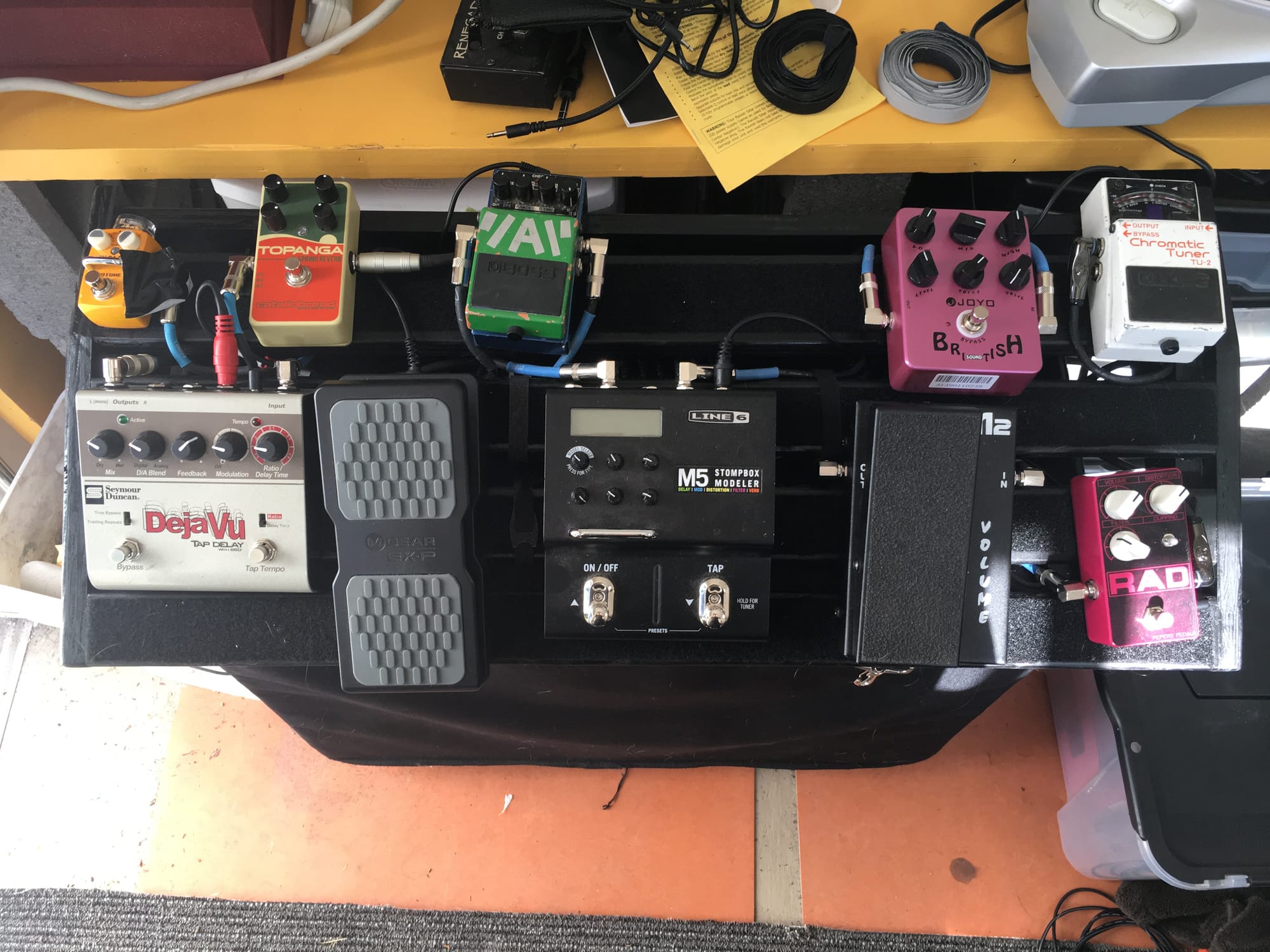
Over the course of the last year, I've really landed on a layout that I like. In order of the signal chain, here it is.
Boss TU-2
Not much to say about this. Fancy tuners come around every once in a while, but for accuracy, visibility, and durability, it's hard to beat the classic Boss.
Pepers Pedals RAD
This is a Rat pedal. Pretty simple. It's made by Tony Pepers in New Zealand, and when you buy his pedals they come with this amazing gummy candy that's only available there. There are standard Rat controls and a switch that changes the clipping mode from standard Rat to Turbo Rat, or removes the clipping altogether. Without clipping, it's decidedly less Rat-like but it's still a very hairy fuzz. I don't stack overdrives and distortions anymore. I just crank up a Rat.
Morley Mini Volume
I love the size of this thing. I always put volume pedals after the distortion, even though I sometimes can't get total silence with it rocked down, because that way the tone doesn't change when I fade it up and down. I do waffle on whether to put it in front of or behind my preamp pedal.
Joyo British Sound
Yes, this is 100% a ripoff, possibly a stolen board design, of the Tech 21 British pedal, and it's probably unethical to buy this or any Joyo pedal because even the original designs have been more or less funded by this kind of stuff. But damn, it cost me $20 and it helps add that throaty, low-midrange roar to my plain sounding solid state amp. Plus I can dial in just the right amount of gain so that even the clean tone has a tiny bit of breakup. That helps make my cleans a little softer on the attack and less obviously solid-state.
Line 6 M5
Line 6 is not exactly the most prestigious brand to put on your board, but this pedal is ridiculously useful for keeping said board from getting completely out of hand. I use it primarily for modulation and special effects. I currently use the M5 for the pitch detune effect at the end of "We Are The Life of the Future," and for wah/filter during "We Live Inside." Both of these use the M-Audio expression pedal that's plugged into it (another not-great brand but it's lasted longer than the Roland one I used to have). Beyond the tremolos, choruses, flangers and other modulators, there are some fun (if not super useful) synth sounds and other random effects. Any effect can have its settings changed with the expression, which makes it doubly useful. And it's true-bypass, so even if you're worried about Patented Line 6 Tone altering your signal, it's alright. Personally, I would never use the preamp and distortion sounds, they're just not that good, but for single-use sounds you don't want to add a whole pedal for... why not?
Seymour Duncan Deja Vu
This is a little-known delay with a hugely useful feature set and a great, live-friendly layout. There's tap tempo that can be set to either delay at the exact tempo you press, or at measure divisions, e.g. you tap the quarter note but it'll delay on a dotted eighth. It has an analog circuit simulator (cuts a lot of highs out of the repeats) with variable modulation (warble, basically) and you can dial any combination between the digital and analog for a lot of tonal variation. You can switch between tails or true bypass (I usually leave tails on and it doesn't really suck tone at all). As a bonus, cranking the delay speed knob way over will give you a looper function.
As if all that wasn't enough, you can plug a TRS into its "insert" jack and put a whole chain of effects there that will only effect the repeats. That's what the Boss PS-2 is doing there: adding either compounding delays or pitch shifts to the repeats. Insane possibilities.
It's basically the best delay pedal I've ever used, and the right combination of simple and powerful.
Catalinbread Topanga
I switch reverbs out sometimes but this one is too fun to leave at home. It's supposed to be an emulation of a Fender spring reverb unit. Yes, you can get some super wet Dick Dale sounds out of it. One of its more enjoyable features is that it's sensitive to volume and creates breakup as you feed it a louder signal. Made in Portland.
Hotone Wally
I may never figure out how to pronounce Hotone, but the Wally is a great little looper. You can stack a lot of loops of different times, you can change their pitch after you've recorded, and change the output volume of the playback. Great features for a tiny pedal. Unfortunately with its single button it's complicated to control and you can't end a loop at an exact time. And believe it or not, for most boards it's actually a little too small. I can't manage to get enough Velcro on the thing to keep it from moving around, and there's nowhere to zip-tie it.
TC Voicelive (not pictured)
The empty space usually has my vocal processor on it. This thing is basically just delays, but it has some sort of compression and possibly EQ in it because everything comes out of it sounding so polished. It was purchased by my bandmate from Mike Scheidt, so it's seen some action but it's really tough. Unlike many other vocal effects I've used, sound people do not hate it.
The Board
The board itself is a handmade wooden job that a friend built at a custom size for a pretty meager amount of money. I painted and velcro'd it, and even though it doesn't have a case and the slats can be a bit weird for the odd form-factor pedals like the Deja Vu, it's solid and really does the trick. The power supply is hidden out of sight and I have been able to velcro-tie the extra cabling. I just need to get an angled plug into that Topanga...
This one is tough. Mark Hollis recently passed, and that was difficult to process but in the musical sense he was already gone, having left a near-perfect legacy of forward-thinking avant-pop that to most people's minds invented post-rock.
Scott Walker on the other hand, despite his age, was still fairly prolific, especially considering his attention to craft and detail.
I can think of at least 4 moments where he defied expectations: Quitting teen idoldom to write music, Scott 4, his songs on Nite Flights, and Climate of Hunter, which really established the rest of his career. There was nothing else on earth like them. There was nobody on earth like him. And there never will be.
I sat down with my son (5) and the Alesis Micron that is now anchoring my live set and we made a little track together. It was going to be called "Disco Slash" but for unknown reasons, he retitled it to the less inspiring "Disco Party." I helped with the mechanics but all the sequencing is him.
Here's cool video with Tony Visconti discussing the creation of "Heroes," the title song of maybe the best of Bowie's Berlin albums. It's amazing just to hear the multi tracks — Fripp's brilliant feedback guitar, the crack band, and Bowie's vocal takes, which get written about a lot but prove his power when you hear them on their own.
It'd be easy to take away that the era of true studio innovation with giant budgets and beautiful studios is mostly at an end so we'll never get great records like this anymore, but it's all there available to us. You could recreate so many of these things and more in your own house. The inspiration is what's important, and there's a lot of it in this video.
One of the more fun things about playing electronic music is figuring out how to perform live. To some people, Ableton Live and its external controllers made the question moot. And to a large number of others, Elektron’s highly playable devices have become the de facto way of low-impact performance design.
But when you’re not interested in bringing out a computer and you don’t have nice Elektron stuff, creating a way to connect and perform on your equipment is a fun and sometimes ridiculous challenge.
Various Reasons, for me, has always been about this. And usually it’s been a little too complicated and unreliable to make things easy to play. But discovering some of the features of my Alesis Micron has really opened up my options.
What it is
Today, my setup starts with the (non-pro) Arturia BeatStep, which mostly provides master clock but runs the sequence on a couple songs. It’s a fun way to run things because even though I can’t hard-wire a tempo to songs, the analog clock helps me go by “feel” a little bit.
From there, the MIDI chain goes to the Micron, which can run a multi-track sequencer. Unfortunately, having multiple sequences in songs means holding down keys and moving your finger around. That’s fine in some cases, and in others I’ve adapted tunes to use the same bassline moved around in key. There can even be rhythms.
In theory, a whole song can be built on the Micron, but I consider my modded Alesis HR-16 to be a signature part of my sound. So that is next in the chain. The snare runs to a cheap delay pedal to help alter sounds and add dubby effects to the beats. From there, I send MIDI clock to my Arturia Microbrute, which is almost always running an arpeggiator timed to that clock. It goes through a preamp for distortion and a Catalinbread spring reverb.
The last piece is a Korg Volca Keys. I use it for pads, leads, and with the aid of a Hotone Wally looper, transitions between songs for less awkward silence while I change patches. The hardest part of this is hitting keys, but I don’t have a small enough MIDI controller to justify bringing out something else.
It’s not the simplest setup I have. There are quite a few connections, and a couple analog synths with no patch recall. It does make changing parts within songs much easier than my previous setup, which had me running around like a crazy person trying to change patterns on multiple sequencers — some of which require two fingers. It’s got a bit of a shambolic timing, which is not ideal in some cases, but a lot more interesting and unique than a perfect computer or Octatrack clock. An audience member described it as “raw,” but to excerpt some of the lyrics, it’s also a mess of tangled wires.
In the quest for audio perfection, I've found myself trying yet another tool.
This time it was thanks to a mastering project — at the end of the day I still ended up doing mastering in DSP-Quattro, an unreliable piece of software that nevertheless is a dedicated mastering DAW. When you need things like crossfades, effects on regions, and DDP export... you need them. It's another 300 bucks to upgrade Studio One to the version that has a mastering workflow, so guess who isn't doing that? I'm continually frustrated by DSP-Quattro's odd workflows and constant crashing, but it does the job eventually.
In the meantime, though, I gave REAPER a shot at it. If you're not familiar, Reaper (it's an acronym but I get really tired of capitalizing it) is a constantly-developing DAW that carries a $60 price tag for amateurs and $225 for pros. My impression of Reaper has always been that it's a technician's tool or "computer person" version of a DAW. That is to say, kind of the opposite of Pro Tools's heavy mimicry of a console-based workflow. One thing that its proponents are always fond of pimping is the customization. Reaper can, within reason, work any way you want it to, but there's a massive learning and setup curve to get there.
Or maybe not. Turns out, it isn't that hard to do a lot of the customizations that force Reaper to work the way you want to work, from tool behavior to making F3 toggle the mixer like Pro Tools.
It also sounds at least as good as Studio One, and has a much cleaner, more native-feeling interface than it used to. And I think that the the "computer-like" focus of the UI as opposed to slavish console worship is actually a strength. There are no audio or MIDI tracks, just tracks, and there are no groups, VCAs, or busses. Every track can be anything, so it supports an "as you go" creative workflow. Takes and playlists work easily.
The shortcoming that most DAWs run up against versus Pro Tools is always audio editing, so that remains to be seen.
I'm going to continue any client work that comes along in Studio One, but try the next An Empty Room recording with Reaper and see how it goes.
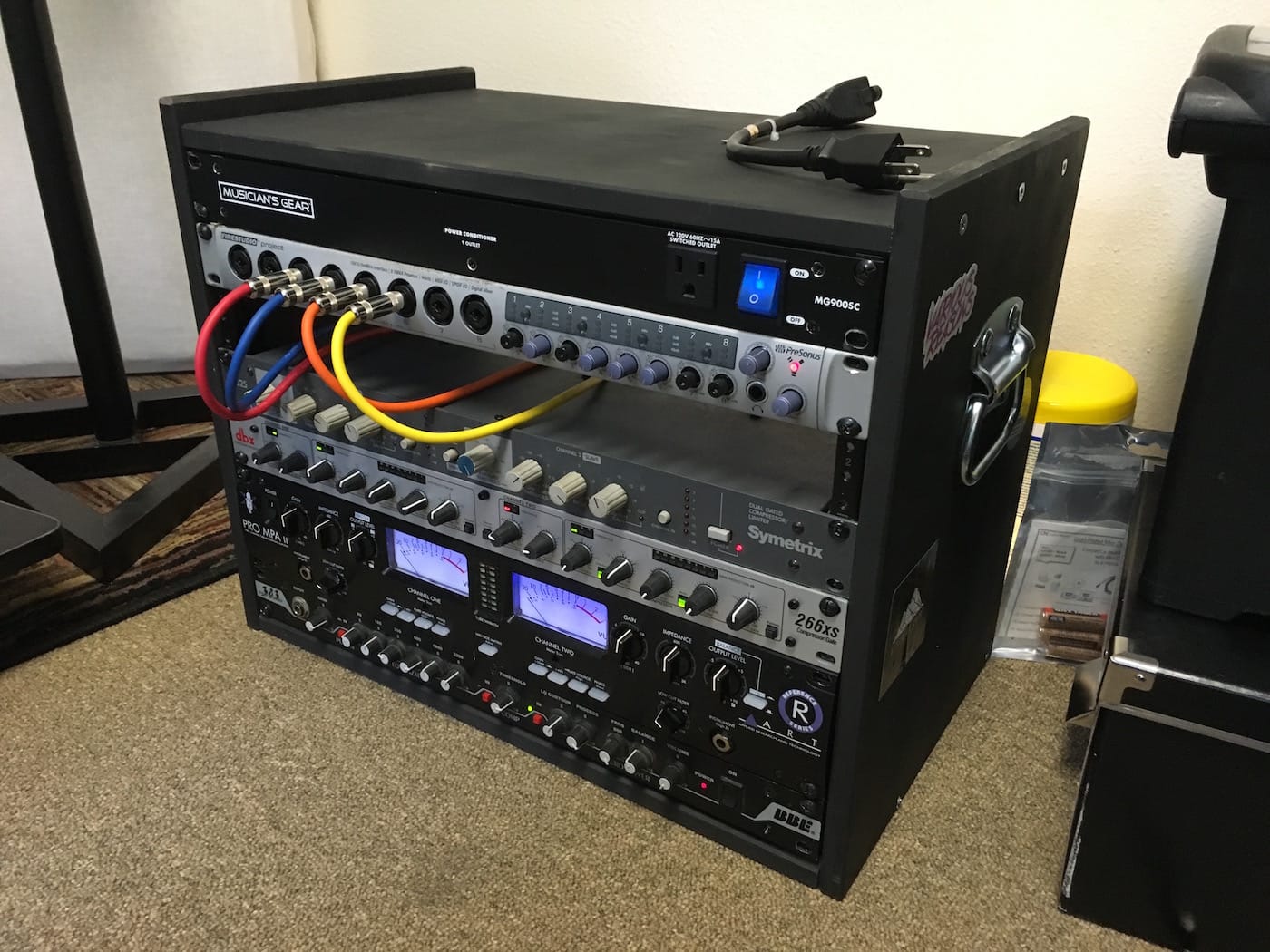
Any time that I spend recording these days tends to be remote, and mixing happens 100% in the box. So loading up the rack spaces in my mix desk with outboard gear doesn't make a lot of sense. Maybe it would if I had some rackmount synths, but I don't. I previously traveled to remote gigs in a giant Odyssey mixer case with 9 spaces on top and 6 on the bottom. It's ridiculous, even after adding casters, and near-impossible to load into the truck without risk of a hernia.
But even the smallest portable rack case is crazy expensive for my purposes. I'm not going on tour. I'll move it occasionally from recording location to studio and back, but it's never going "on the road." So after looking around I finally found this simple "IKEA hack." Conveniently, the Rast table is 19" wide on the inside and made of unfinished pine. Assembled as-is with some rack rails attached, it'll hold 6U worth of rack gear. But a slight modification lets it hold 8U. I added handles and a flourescent light in the back, spray painted it black, et voila, a stupid-simple case.
With the bigger items like my ART preamp, there isn't a lot of horizontal room left, but if I ever did this again I think I'd move the rack rails a little farther inside so the knobs were more protected. And for $15 at IKEA, I suppose I could make another attempt.
FYI, my el cheapo signal chain, from the bottom up:
BBE bass EQ and preamp. I dislike the Sonic Maximizer and the "BBE Sound" in general, but this thing will even out a crappy bass guitar and give it some sustain and punch.
ART Pro MPA II (Gold Edition) mic preamp. ART get no love, but their black 2U tube units (MPA, VLA, Channel) sell for under $200 and they sound good. The Gold Edition swaps tubes for a less hissy gain. I mostly use it on vocals, but if you have to record a guitar direct it'll give you real tube gain, which will make any plugin amp simulator sound that much more authentic.
dbx 266xs compressor. I believe the "xs" stands for "extra shitty" when it comes to dbx's model line, but honestly it's still a dbx compressor. Which means it's pretty transparent and easy to use as well. For vocals I'll dial in some light compression when recording, but it's useful as a limiter as well if that's all you need.
Symetrix 525 compressor. I guess these things were originally for radio (duck the music as the DJ talks) but the sound is pretty darn good; I tend to use it to fatten/lengthen the sound of snares. Symetrix compressors have the distinction of being ultra-cheap (now and forever) but somehow approved by the GearSlutz community as useful tools.
Presonus Firestudio Project. I now have two of these interfaces because they're that good. For the money, it's almost impossible to beat the Presonus stuff. Decent gain on the preamps (could be better for vocals but that's what the ART is for), low noise, and pretty configurable and versatile. Chaining two is a breeze and gives you 16 mic inputs and 10 stereo outputs for a good bit less than a grand. I have never actually done remote recording with all 16, but in theory you could do a pretty good sized band at once.