
All postsEXPLORE TOPIC

#music

Making it, listening to it, recording it, all that

A mysterious mystery, no longer mysterious

Here's some good and fun news on a day when we could use it. One of the greatest internet mysteries of the past decade has been solved.

Maybe you've heard it on a podcast, or possibly read about it in a news story from Buzzfeed or NPR. But since 2019, a group of detectives have been trying to track down The most mysterious song on the internet, sometimes shortened to The Mysterious Song or TMS.

The song itself is really good if you ask me — it has a goth/post-punk vibe but a strong and catchy hook in the verse. The singer has that doom and gloom gothic voice that might remind you of other post-punk singers like Ian Curtis, Andrew Eldritch, or Rodney Orpheus. The guitars, likewise, do similar things to Joy Division or Echo and The Bunnymen, but there's a Yamaha DX7 adding some additional textures that bring a 1987-88 vibe to what feels otherwise firmly early-80s.

The saga actually begins much further back, when a German kid recorded the song off the radio in (probably) 1984 but never heard the DJ say what it was. His sister started looking for it online as far back as 2007. Here's a good rundown from a subreddit dedicated to the search, including links to deeper explainers and even redditors obsessing over DX7 patches.

The story continues with a lot of rabbit trails, false starts, and even some obscure Greek post-punk musicians claiming the song and uploading the crappy radio recording to Spotify as their own (sad, really; Statues in Motion turned out to be a good band that a lot of folks in the search enjoyed listening to, but their efforts to co-opt the song kind of taint them). But 3 days ago, a user made a post confirming that the creator of the tune, a German group called FEX, was found. To prove its validity, he added a different recording of it to his post. Turns out, the radio version was just a demo, which is why the German radio station didn't retain the tape — it was their policy to toss demos after playing them.

So now we know: the song is called "Subways of Your Mind" by FEX from Kiel, (West) Germany. We have multiple songs from them and at least one of those is also pretty great. They plan to get back together to make a modern re-recording of the tune.

And that's it. On one hand, I can't help but feel a little sadness at one less mystery in the world (the imagination can always create something cooler than reality, of course). But on the other, these guys who had no idea what was going on for the past 5 years are now going to get their due. And there are more lost tunes to find, even if they're not all as famous as this one.

Discuss

Another Highwayman down

My mom loved to say she hated Kris Kristofferson. We used to go back and forth over that. She'd say he couldn't sing, I'd say it didn't matter because he was more of a writer. He was respected by the greats, not just the singers who sang his songs, but to other renowned writers like Willie Nelson and Bob Dylan. He couldn't really act either, though he probably edged out Willie in that regard.

What a lot of folks are remembering him for right now though, since Sinead O'Connor's death is still fairly fresh, is his defending her when nobody else would. Maybe it's problematic to remember such a fierce feminist with an event like this ("I didn't need a man to rescue me," she later said, though she was indeed shaken). But it's a great way to remember a good ol' boy who — like Willie — often defied stereotypes.

Discuss

Chappell Roan trying to change the game

A year after Billie Eilish justified her baggy clothing by saying she "didn't want people to have access to [her] body, even visually," Chappell Roan is trying to take things a bit further by asserting that her fans don't own her and that she'll just up and quit if they don't back off.

The fact that she's doing this on TikTok starts to get into the complicated nature of what's going on here. When artists and celebrities are on social media sites and talk so directly to their fans as she does, it exacerbates the parasocial feelings that some fans already have, which were probably initiated by the unique and sometimes explicitly confessional aspects of her music and lyrics. But how else to communicate that she is indeed a person and wants to be treated as one? Hard to unravel. it's similar to Eilish's dilemma about sexualization: how to feel positive about people praising her baggy clothes when she feels there's an element of slut-shaming to it?

Of course there are always the commenters and even music writers who'll say that she knew what she was getting into, that this is fame. But fame these days is a different beast, and you're gonna get it from all sides if you're a young woman (from the girls your music is aimed at because you spoke so directly to them, and from men because uhhh we're creeps). Despite being discovered on YouTube, Roan seems like a pop star who belongs in a pre-social-media era, when her stage name could've been the only thing people knew about her. But in the 2020s, Stan isn't even an outlier anymore.

I don't really have a point, not sure I even have an opinion, but I do feel for these young women. Sure, they wanted fame, but for an artist that usually means "sharing the stuff I make with people," not sharing their entire existence.

Discuss

I find it kinda funny, I find it kinda sad

Tears for Fears is doubling down on using AI for the new live album cover. This is a little disappointing from a band I have a lot of respect and no small amount of love for. Perhaps they think they're not falling into the usual trap because they've paid someone. Never mind that person has scammed them with one of the most typical images on the internet, whether human- or machine-generated. It's likely, given they haven't done a basic image search, that they're just old guys who don't know the state of things. And maybe they really don't care. It's a live album from a legacy act. But call me old fashioned or a commie or whatever, I think artists should support other artists.

Hayao Miyazaki saying I strongly feel that this is an insult to life itself

The summary of my feelings on LLM-generated "art": There are so many things that machines can do to make our lives easier — and they should be doing them, so humans can be free to make things like art.

Discuss

Live video

Here's my new-ish project SHIVERING at a show a few weeks back. We play few shows so we try to make it decent, with lights and projections and whatnot, since a couple guys pushing buttons and turning knobs isn't the most dynamic and interesting thing to look at.

Discuss

When you can't be an early adopter

The beta version of the MPC version 3 software is out, and I can't install it because I have shows and can't rely on beta software to not lose all my shit or crash while playing. But oh man, it looks great. On one hand, it does not dispel the notion that modern MPCs are "DAWs in a box," but it also looks more touch-friendly and visible onstage in many ways.

Unfortunately, one of the coolest things (IMO) about the MPC is how the desktop software is sort of an extension — a bigger interface, a plugin host, etc. And until version 3 of that comes out, I have no idea what the experience is going to be like when using the thing in controller mode.

Still... stoked.

Discuss

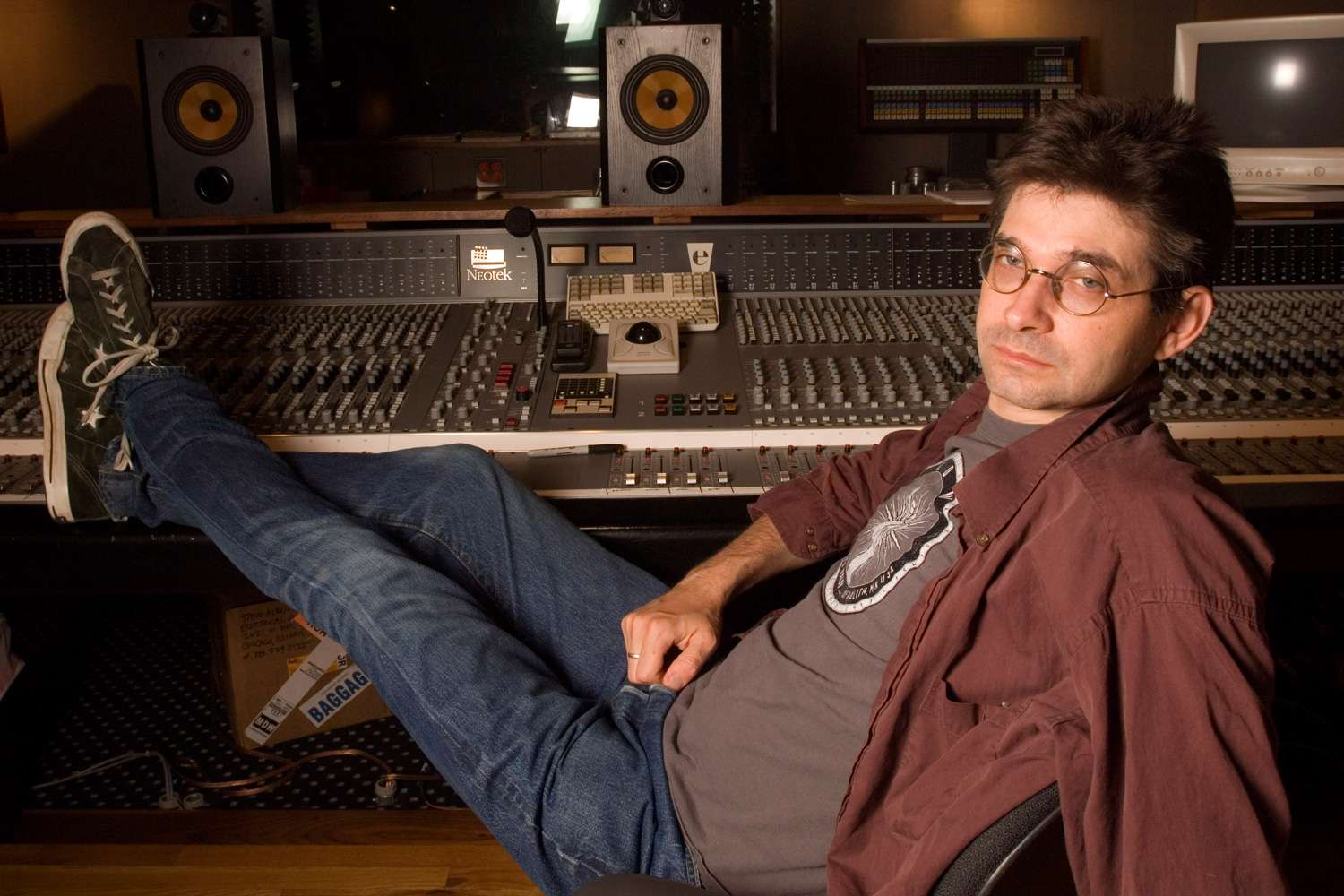
A world without Steve Albini

Apparently I'm only inspired to write when someone dies? But this is a tough one. Steve Albini was a guy who affected me musically long before I heard Big Black, though that was a truly formative experience for me as a musician and a music nerd.

He of course recorded Nirvana for In Utero and was famously rebuffed by their major label. He then recorded the jillion-selling "Nirvana with the punk rock all sanded off" Bush, who were inspired by In Utero in the same way that Kurt and Krist were inspired by the Pixies' Surfer Rosa and Pod by The Breeders.

Big Black

But it was the first spin of "Steelworker" from the debut Lungs that really did it for me. Not only was this a song that used a drum machine with heavy guitars years before Godflesh's debut or Ministry's pivot to metal, but lyrically it was a marvel. He was clearly inhabiting a character. But rather than a purely sympathetic view of a blue-collar man or a portrait of a hillbilly as racist and ignorant, it was a multi-dimensional piece of writing that really got under my skin (much like the "great big thing crawling all over me"). I ate up the rest of the discography, though I got into Shellac a good bit later.

Recording

In the subsequent years, I found a Steve Albini recording credit to be the mark of a certain type of band or artist. Whether it's Joanna Newsom or Sunn O))), if you seek him out there are certain things you're looking for, and most of all it's probably a punk-informed dedicationt to making a band "sound like they sound." No tricks, no double-tracking, minimal overdubs — he even eschewed compression most of the time in favor of the full dynamic range of the amps and drums sitting in his studio's mud-brick rooms. As much as he'd deny it, there is a sound to his records, but it's primarily that sound of Electrical Audio and its walls, not of a producer imposing an aesthetic on bands.

Becoming better

One thing most people knew about Steve Albini, a perception that he had a hard time changing, is that he was a prickly, opinionated individual with a knack for trash talk. This, combined with the, uh, boundary-pushing nature of a lot of his musical and related output (see both "Rapeman" as a band name and the Forced Exposure articles that are getting him gotcha-branded posthumously, accusations I'm not really gonna take seriously), made him the perfect candidate for the project that he undertook in the last few years: reckoning with his past as an OG edgelord. I think it's reasonable to say that he provides a good example for anyone who really feels punk rock values but may have gotten caught up at one time or another in the more "fuck you, mom" aspects of punk culture, and a template for living with principles. Bonus, it's a template for all dudes, white people, and cis people who might've thought that they could get away with certain stuff because of the way they feel in their hearts or whatever. In a dual interview with Vish Khanna, he comes down on Ian Mackaye of all people for falling into the trap of thinking that punk rock shouldn't be "PC," by defining "PC" as pretty simply as conservative rebranding of "not being an asshole."

Giving

Albini seems to have been quite generous. He spent the last twenty years raising money and personally delivering needed presents for the most down-and-out Chicagoans on Christmas. And he regularly shared his knowledge of making records, trying very hard to be practical and demystify not just his, but all practices of recording sound. Not just in expensive meet-the-masters type courses, but in countless freely available videos on YouTube.

All of this adds up to a person I felt I could be inspired by, and who was loved by most people who knew him. It's going to be a strange world without him.

Discuss

RIP Gary Floyd

A few days before the earth-shattering news that Steve Albini had passed, we lost another great of the punk rock world, the mighty Gary Floyd.

Floyd was the frontman of the Austin TX punk group The Dicks, and aside from being an early figure in non-LA hardcore, he was a bold-ass human being who was 300+ pounds, openly gay, openly communist, and often in drag on stage. And for all of Austin's reputation as a haven for weirdos and punks, it was and is still in Texas. So I'd argue Gary Floyd was one of the bravest, gnarliest, most badass punks in a genre that even then was becoming increasingly tough-guy and jock-ified.

So RIP to one of the realest to ever do it, and one of the very few people to get a Butthole Surfers song named after him.

Discuss

In service of the groove

Musically, I am many things, though my skills range from "not bad" to "technically, yes, you are playing that instrument." But I love drums, and I generally appreciate a great drummer more than a shredding guitarist.

I find a lot of people who get really into drums go in one of a couple particular directions. One is of course jazz, which means that you will probably admire Buddy Rich and Art Blakey above all and if you're a rocker you'll try to emulate fusion greats like Tony Williams. Or, you become one of those insufferable prog guys who have never voluntarily touched Black music and just want to be like Tool or Rush. Now, don't get me wrong: Neil Peart was as impressive behind the kit as he was terrible at lyrics. But to me, there are more important things than the number of hits you can slip into a measure.

My all-time greatest drummer list includes primarily people who:

  1. Invented a beat
  2. I could listen to play that beat, unceasing, for hours on end

This is the GROOVE. It's easy to know when you hear it, hard to define, and rarely as good as it is with these guys. Also, all of them are dead, which is depressing.

Klaus Dinger (NEU!)

Motorik

The best name in the bunch. Dinger is the original drummer for Kraftwerk when they had one, before he formed NEU! and later La Dusseldorf. He never called it "motorik," just something like "endless beat," but both make sense when you hear it. A lot of interesting bands owe a lot to Neu!.

Bernard Purdie and Clyde Stubblefield (James Brown)

The Purdie Shuffle and the Funky Drummer

James Brown was a genius bandleader but he also knew enough to get the right guys. He had two of the best drummers in the business at the same time. Purdie is best known for "The Purdie Shuffle," a basic beat with very little actual shuffle or swing but an insane amount of variable ghost notes that give it incredible funk. Stubblefield had his own magic, and thanks to a track that got released as "The Funky Drummer," he became the single most sampled drummer in history. The only break that comes close to Funky Drummer's ubiquity is the Amen Break.

I think what both of these guys taught me I applied to drum programming more than acoustic drumming: Swing is an artificial way of humanizing a drum machine, but you can create an intense groove in the manipulation of dynamics (that is, volume) of the different hits. Here's about 8 minutes of only the most famous samples of Funky Drummer.

Tony Allen (Africa 70)

Afrobeat

I said when Tony Allen died that the title for "Best drummer on earth" is now up for grabs. Not sure who claimed it. Allen did a lot of things, dabbling in everything from jazz to dub, but he's best known as Fela Kuti's drummer and the innovator behind the Afrobeat. Not the genre, but the beat itself. It's hard to pin down, but for me it's also hard to stop listening to. He's never ever doing a straight beat, but somehow your head can't stop nodding. His discography is massive. There's solo stuff, Fela, even The Good, The Bad, and the Queen with Blur/Gorillaz's Damon Albarn and Paul Simonon from the Clash.

Jaki Liebezeidt (Can)

What do you even call this?

The idea that you can listen a single rhythm literally forever and not get bored was introduced to me by Can. James Brown and Fela Kuti could groove for a long time, but nothing compares to the 18-minute album version of "Hallelulwah" from Tago Mago — let alone some of the live versions that last even longer. Just gonna put it out there: no German has the right to be this funky.

Discuss

Apples to MPCs

If you've ever spoken to an electronic musician or a guitarist, you know that GAS (Gear Acquisition Syndrome) is a chronic disease. And though it can be treated, the results tend to be temporary.

The issue, aside from the obvious financial ones, is that gear can never actually solve your problems. That's what all the pros say, anyway, but who can trust them? They have really nice gear.

The real issue, at least as I see it, is that so few pieces of electronic music equipment can be compared in an apples-to-apples sort of way. Guitars? Sure. Tone-chasing is a thing, and a neurosis that's even worse than GAS, because it can cause you to hoard dozens of distortion pedals, claiming they all do different things. But are they all objectively distortion pedals? Yes.

Are a Roland SP-404MKII, an Akai MPC, a Novation Circuit Rhythm, a Korg Electribe Sampler, a Polyend Tracker, and an Elektron Octatrack objectively the same thing? Sort of. They are samplers with sequencing. Most are capable of sequencing external machines via MIDI. Most store samples on an SD card. But it stops there. They range from around $350 to about $1500, and that's not just the honorable Swedish pedigree that's giving Octatrack that kind of price tag. They have varying amounts and quality levels of built-in sounds. There are wide ranges in connectivity and numbers of tracks. Some are more sequencers with sampling capability, others are samplers with just enough sequencing to make you think it's an all-in-one device. Some are very good at both. Some have no screens, some are basically computers in a box. You get the idea.

So, in a live set, to replace Circuit Rhythm and Circuit Tracks with an MPC One is more or less an even trade in terms of whether the same stuff I've been doing is possible. But what else is possible? Turns out, a great deal. More on that another time.

Am I going back on what I say in this post by replacing the Circuits as the centerpiece of live work? Not really, because I'm not thinking of it as an "upgrade." I still think that they are the most beautiful, elegant, and fun quick-composition machines out there, especially the Tracks. But that's not to say that another device doesn't have a place in my show or in my life.

Discuss