All postsEXPLORE TOPIC

#gear

In praise (and defense) of the Novation Circuits

Pretty regularly on the Novation Circuit subreddit, a question like this or a comment expressing the same general idea appears. I'm not familiar with any other music gear subs where the users are so often actively trying to get away from their chosen devices.

The Circuit OG/Tracks/Rhythm are very interesting devices. Novation took the success of the Launchpad, an Ableton clip launch controller, and expanded it into a standalone device that really isn't like anything else. There's no screen. The pad grid serves as the user feedback for every function: step sequencing, keyboard, pattern launching, mixing, even the tempo display. That makes it a device that sometimes needs a great deal of memorizing (or RTFM, initially). But it also makes it a device that absolutely nails what it means to be immediate and tactile — attributes that screen-poisoned musicians supposedly crave these days when they step away from the DAW. There's no clicking, no menu diving, no using a scroll wheel to name a pattern. There's you, there's the buttons and knobs, and there's the music. And trust me, it's extremely quick to get to the "music" step. Features of both current-gen Circuits include one-button "scene" launching, sequencer probability and random mutation, pattern chaining for very long variations, and really usable reverb and delay.

So why does everyone think they need to "upgrade" to an Elektron machine, an MPC, or god forbid a Roland MC-707?

Cheap...

Firstly, these things are not expensive. About $350 gets you a new one, and for better or worse this "gotta upgrade" attitude leaves Reverb stocked with them for much less. I think there's an attitude with all kinds of musicians that the more you spend, the better your stuff is. Surprise! That's bullshit. It's not that I'm that old blues lawyer guitarist insisting that "tone is in the fingers" — after all, these same people are connecting 1958 Les Pauls to Dumble amps via Monster cables.

What I mean is electronic musical instruments are very rarely apples-to-apples comparisons. They all have their strengths and their frustrations. And good stuff has never been cheaper than it is right now.

And unspecialized...

The second thing is that, possibly because of said price, no pros have decided that these things have a certain space. If you want to make hard techno or dancey industrial, people like NIN and Richard Devine have sold you on Elektron machines and their hyped, exciter-pumped sounds. If you make lo-fi or boom bap, you want an SP-404 because Madlib, J Dilla, Flying Lotus, and who knows who else used one to make their iconic material. Even doofy gear gets this treatment at times, like the really uninspiring Microkorg being anointed the "synth for an indie rock band that has a synth."

What is the Circuit's space? It doesn't have one. I wouldn't say it's a "master of none" because it's quite good at plenty of things, but looking at it you don't say "ah yes, this thing is for X."

First composition with both Tracks and Rhythm
by u/vrsrsns in novationcircuit

Just like me.

What I can say about the Circuits, especially the Circuit Tracks, is that they are now my centerpiece for both performing and composing, and in 20+ years of making live electronic music I have not owned another machine that enabled my way of working so thoroughly.

Would I like more precise sample cutting onboard? Yeah probably. What about separate outputs? Always want those. But "missing" features like these imply that the very purposeful design of these devices somehow includes more mistakes than it actually does. And the sum of the features versus tradeoffs is unlike anything else out there for both utility and (gasp) fun. So I'm not sure that an upgrade would actually be one at all.
Discuss

I salute you, MMT-8

Few pieces of gear are, on their own, really inspiring. Even the worst gear has its merits, but even the best sounding stuff isn't enough to be a wellspring of creativity. Ableton Live comes to mind, as well as the truly unique Novation Circuit, a cheap groovebox with no screen that I love almost as much as a family pet.

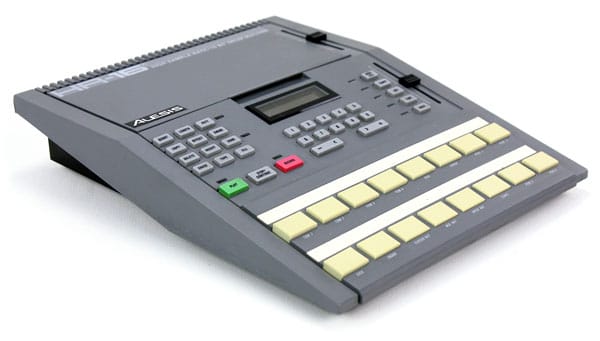
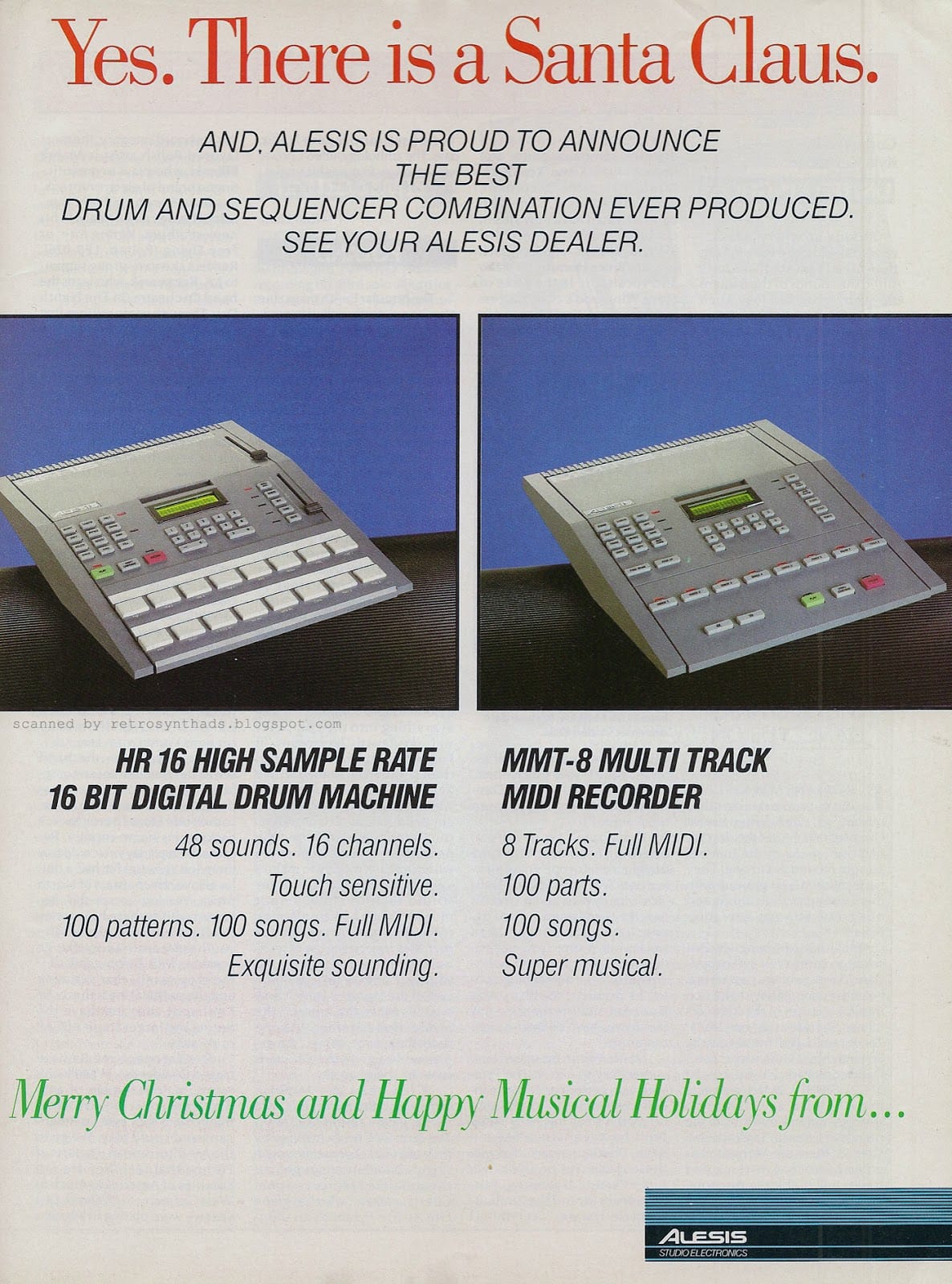
Lately I've been digging an old school piece of hardware that probably sounds the least likely to fall into this category. The Alesis MMT-8 is technically not a sequencer, but an 8-channel MIDI "recorder" and playback machine. It really does work a lot like an 8-track tape machine, but with MIDI data instead of audio. That means that it can control up to 8 devices by either playing notes, triggering their own sequencers, sending program change, and transmitting CC data. It's become the central master of my setup, and though it has its faults, it's so refreshing to get away from the computer for real that I'm itching to get on with writing new music.

It's a strange design that could only come out of the late 80s, like Knight Rider. It shares the lazer-zap shape with its brother the HR-16 (precursor to the most successful drum machine of all time, as well as the strange flip-up panel on top that contains an abbreviated user manual. Oddly, that shape does have the advantage of fitting a Korg Volca really nicely.

Alesis MMT-8

The first "issue" with the machine is that it doesn't have a very accurate clock. It's slow by about a whole BPM. If you want to be tempo-accurate, you need something else to send the data. On its own though, it has a pretty solid clock, though it purely transmits what was recorded into it, so if you want some unique feel or timing with "character" you'll need to trigger other sequencers. I'm just dreading when I play a show and someone comes up to me to say "I bet you thought you were playing at 74 bpm but that was really 73." They're out there. I'm sure of it.

The one workflow issue it has is a lack of overdubbing. If, for instance, I want drums and hi hats to be on the same track, I have to play the whole mess at once. Potentially a challenge, and more or less impossible if I want some kind of CC data at the same time. So those have to go on different channels. That being said, I have yet to feel like I need more than 8 channels. And when I do, I'll probably just find another MMT for about a hundred bucks. It does have extremely detailed editing capability as long as you're willing to do it on a 2-line LCD screen with squishy rubber buttons.

It's remarkably fast and intuitive once you're in there, and that has always been the most important thing to me in a creative tool. Get me punching in notes and feeling the song, not thinking about how a thing works. And it's rare to get that along with the immediacy of hardware.

So, Alesis MMT-8, I salute you.

Discuss

New device: Behringer TD-3

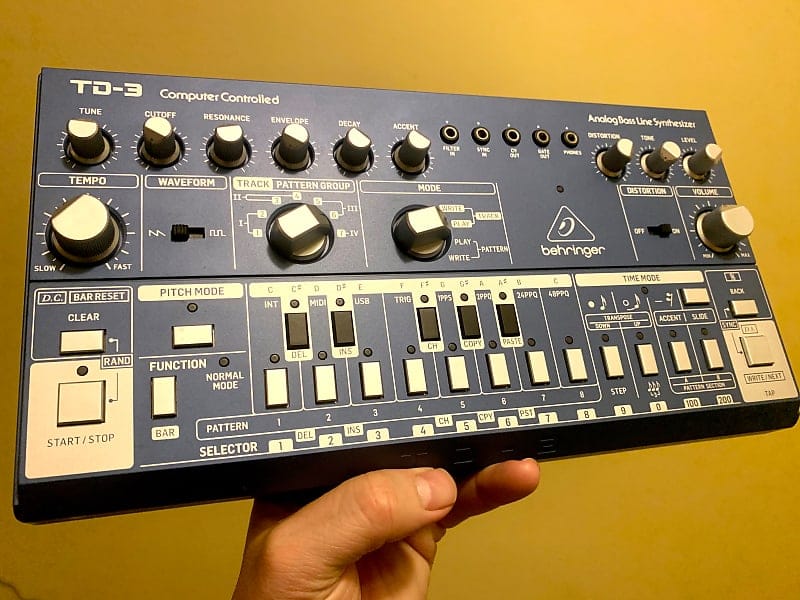
It's pretty safe to call Behringer "much-maligned." Obviously they have a tendency to do the cheap imitation version of gear, and Uli seems like kind of a dick. But rather than Mackie mixers or random pedals, they've set their sights in the past decade on the unobtanium of electronic music stuff. The Minimoog, the ARP 2600, the 808. And one of the recent ones is the Roland TB-303.

I picked one up on Reverb for under $100 shipped, so it's kind of hard to say no. It goes well with my other small, cheap desktop modules like the Volca series and Arturia Microbrute. It is, however, a bit flimsier feeling than the others. But I've been assured by some owners of the original that it was also a plastic box that you wouldn't want to drop from too far up.

Sounds

So how does it sound? There are plenty of YouTube videos at this point, but more than any other piece of synth gear I have, it does One Thing. It does that thing right, though. There are two wave shapes, the saw and square, and simplistic filter controls that were meant for guitarists rather than subtractive synth experts to work. The TB-3 adds a nice distortion option that the 303 lacked, and it really helps the bass cut through a thicker mix. I almost never turn it off, especially on the square wave shape. There's also a little patch bay at the top that lets you do some very basic CV controls. I could probably sync the filter to the kick pattern of the Volca Beats or send gate info to the Microbrute arpeggiator, but I have yet to play with it.

Sequences

The one thing that I almost wish wasn't so authentic is the sequencer. It works by programming notes, then by going back and programming all their lengths, including rests and holds. You really have to plan out your patterns in advance before starting to punch buttons. Fortunately, you can switch the thing into pitch mode and send it notes from somewhere else, like Ableton Live or my Alesis MMT-8 sequencer.

Summary

Those folks who automatically won't buy Behringer aside (I get you), the TB-3 isn't a device for everyone. It only does one thing, and chances are it'll makes you think of acid house as soon as it starts playing. But if you need bass in your setup, you could do a lot worse than around a hundred bucks for something that can shake the floor.

Discuss

Pedal bored

Like any mediocre guitarist, I spend a lot of time rethinking my tone and my pedalboard. Like any experimental musician who likes to turn guitars into other sounds, I spend a lot of time trying to balance versatility and ease of use. Nobody likes to tap dance one-footed, even if you can perform an entire symphony.

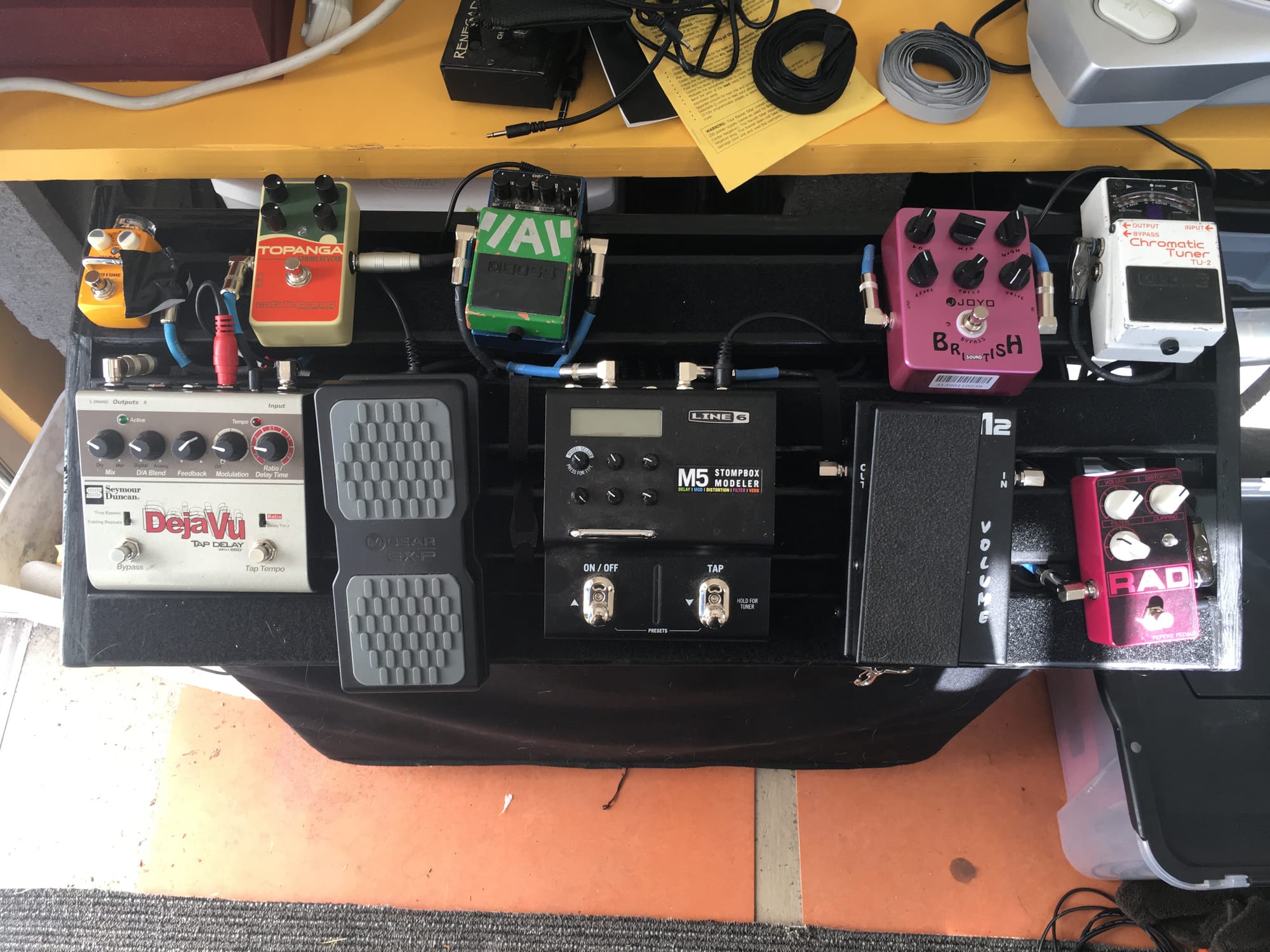
Over the course of the last year, I've really landed on a layout that I like. In order of the signal chain, here it is.

Boss TU-2

Not much to say about this. Fancy tuners come around every once in a while, but for accuracy, visibility, and durability, it's hard to beat the classic Boss.

Pepers Pedals RAD

This is a Rat pedal. Pretty simple. It's made by Tony Pepers in New Zealand, and when you buy his pedals they come with this amazing gummy candy that's only available there. There are standard Rat controls and a switch that changes the clipping mode from standard Rat to Turbo Rat, or removes the clipping altogether. Without clipping, it's decidedly less Rat-like but it's still a very hairy fuzz. I don't stack overdrives and distortions anymore. I just crank up a Rat.

Morley Mini Volume

I love the size of this thing. I always put volume pedals after the distortion, even though I sometimes can't get total silence with it rocked down, because that way the tone doesn't change when I fade it up and down. I do waffle on whether to put it in front of or behind my preamp pedal.

Joyo British Sound

Yes, this is 100% a ripoff, possibly a stolen board design, of the Tech 21 British pedal, and it's probably unethical to buy this or any Joyo pedal because even the original designs have been more or less funded by this kind of stuff. But damn, it cost me $20 and it helps add that throaty, low-midrange roar to my plain sounding solid state amp. Plus I can dial in just the right amount of gain so that even the clean tone has a tiny bit of breakup. That helps make my cleans a little softer on the attack and less obviously solid-state.

Line 6 M5

Line 6 is not exactly the most prestigious brand to put on your board, but this pedal is ridiculously useful for keeping said board from getting completely out of hand. I use it primarily for modulation and special effects. I currently use the M5 for the pitch detune effect at the end of "We Are The Life of the Future," and for wah/filter during "We Live Inside." Both of these use the M-Audio expression pedal that's plugged into it (another not-great brand but it's lasted longer than the Roland one I used to have). Beyond the tremolos, choruses, flangers and other modulators, there are some fun (if not super useful) synth sounds and other random effects. Any effect can have its settings changed with the expression, which makes it doubly useful. And it's true-bypass, so even if you're worried about Patented Line 6 Tone altering your signal, it's alright. Personally, I would never use the preamp and distortion sounds, they're just not that good, but for single-use sounds you don't want to add a whole pedal for... why not?

Seymour Duncan Deja Vu

This is a little-known delay with a hugely useful feature set and a great, live-friendly layout. There's tap tempo that can be set to either delay at the exact tempo you press, or at measure divisions, e.g. you tap the quarter note but it'll delay on a dotted eighth. It has an analog circuit simulator (cuts a lot of highs out of the repeats) with variable modulation (warble, basically) and you can dial any combination between the digital and analog for a lot of tonal variation. You can switch between tails or true bypass (I usually leave tails on and it doesn't really suck tone at all). As a bonus, cranking the delay speed knob way over will give you a looper function.

As if all that wasn't enough, you can plug a TRS into its "insert" jack and put a whole chain of effects there that will only effect the repeats. That's what the Boss PS-2 is doing there: adding either compounding delays or pitch shifts to the repeats. Insane possibilities.

It's basically the best delay pedal I've ever used, and the right combination of simple and powerful.

Catalinbread Topanga

I switch reverbs out sometimes but this one is too fun to leave at home. It's supposed to be an emulation of a Fender spring reverb unit. Yes, you can get some super wet Dick Dale sounds out of it. One of its more enjoyable features is that it's sensitive to volume and creates breakup as you feed it a louder signal. Made in Portland.

Hotone Wally

I may never figure out how to pronounce Hotone, but the Wally is a great little looper. You can stack a lot of loops of different times, you can change their pitch after you've recorded, and change the output volume of the playback. Great features for a tiny pedal. Unfortunately with its single button it's complicated to control and you can't end a loop at an exact time. And believe it or not, for most boards it's actually a little too small. I can't manage to get enough Velcro on the thing to keep it from moving around, and there's nowhere to zip-tie it.

TC Voicelive (not pictured)

The empty space usually has my vocal processor on it. This thing is basically just delays, but it has some sort of compression and possibly EQ in it because everything comes out of it sounding so polished. It was purchased by my bandmate from Mike Scheidt, so it's seen some action but it's really tough. Unlike many other vocal effects I've used, sound people do not hate it.

The Board

The board itself is a handmade wooden job that a friend built at a custom size for a pretty meager amount of money. I painted and velcro'd it, and even though it doesn't have a case and the slats can be a bit weird for the odd form-factor pedals like the Deja Vu, it's solid and really does the trick. The power supply is hidden out of sight and I have been able to velcro-tie the extra cabling. I just need to get an angled plug into that Topanga...

Discuss

Synthesizin'

One of the more fun things about playing electronic music is figuring out how to perform live. To some people, Ableton Live and its external controllers made the question moot. And to a large number of others, Elektron’s highly playable devices have become the de facto way of low-impact performance design.

But when you’re not interested in bringing out a computer and you don’t have nice Elektron stuff, creating a way to connect and perform on your equipment is a fun and sometimes ridiculous challenge.

Various Reasons, for me, has always been about this. And usually it’s been a little too complicated and unreliable to make things easy to play. But discovering some of the features of my Alesis Micron has really opened up my options.

What it is

Today, my setup starts with the (non-pro) Arturia BeatStep, which mostly provides master clock but runs the sequence on a couple songs. It’s a fun way to run things because even though I can’t hard-wire a tempo to songs, the analog clock helps me go by “feel” a little bit.

From there, the MIDI chain goes to the Micron, which can run a multi-track sequencer. Unfortunately, having multiple sequences in songs means holding down keys and moving your finger around. That’s fine in some cases, and in others I’ve adapted tunes to use the same bassline moved around in key. There can even be rhythms.

In theory, a whole song can be built on the Micron, but I consider my modded Alesis HR-16 to be a signature part of my sound. So that is next in the chain. The snare runs to a cheap delay pedal to help alter sounds and add dubby effects to the beats. From there, I send MIDI clock to my Arturia Microbrute, which is almost always running an arpeggiator timed to that clock. It goes through a preamp for distortion and a Catalinbread spring reverb.

The last piece is a Korg Volca Keys. I use it for pads, leads, and with
the aid of a Hotone Wally looper, transitions between songs for less awkward silence while I change patches. The hardest part of this is hitting keys, but I don’t have a small enough MIDI controller to justify bringing out something else.

It’s not the simplest setup I have. There are quite a few connections, and a couple analog synths with no patch recall. It does make changing parts within songs much easier than my previous setup, which had me running around like a crazy person trying to change patterns on multiple sequencers — some of which require two fingers. It’s got a bit of a shambolic timing, which is not ideal in some cases, but a lot more interesting and unique than a perfect computer or Octatrack clock. An audience member described it as “raw,” but to excerpt some of the lyrics, it’s also a mess of tangled wires.

Discuss

In praise of the Alesis SR-16

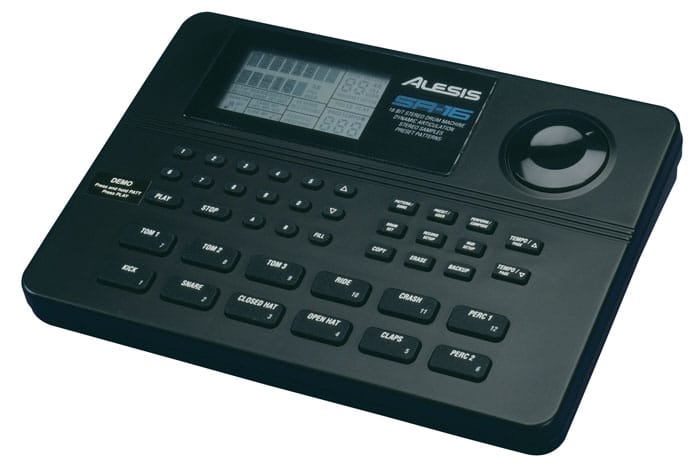
I was somewhat surprised recently to see that some people on the group-buying site Massdrop were attempting to get a group together for the Alesis SR-16 drum machine. At its regular street price, the SR-16 is at the same price point as a lot of other newer, more fashionable machines. The Volca Beats is an insanely fun, great-sounding, compact true analog 808 clone for the same coin. Boss continues to make good drum machines for the same or not much more.

And recently I've been in multiple conversations about how the Alesis brand is mostly garbage. This is a shame, at least for the sake of a few great machines — The Micron/Ion keyboards are among the best synths to come out of the now-passé virtual analog era — but most notably for the SR-16. It's somewhat hard to love, but it's also hard to deny.

HR-16

Alesis produced the very first 16-bit sampling drum machine, the HR-16. Previous sample-based machines, like Oberheim's DMX and the Linn LM-1, were 8 or 12-bit. "HR" stood for high resolution and it really wasn't a pose. The samples were good, they had multiple velocity levels, and they were tunable. But there was, as with all machines of the time, a single kit worth of sounds to choose from. I use one, and I replaced the internal chips with Linn LM-1 sounds.

SR-16

Fast forward to 1993, and the successor to the HR-16 didn't do much for innovation, but it added every feature you might want in a drum machine. There were velocity-dependent samples: if you hit a pad harder you'd hear a sample of a drummer hitting the drum harder, rather than just the same sample at higher volume. There were two drum "fills" for each pattern, so that switching between patterns was less robotic and more realistic. For live standalone users, there were two foot pedal inputs for changing patterns hands-free on stage. But if you wanted to use the unit as a sound module, the MIDI implementation was more complete than anything on the market. Godflesh upgraded their HR-16 to an SR-16, and I started playing fairly Godflesh-like music with one, recording my ideas to 4-track. It also powered my first industrial/experimental band for quite a while before finally giving up the ghost after about 10 years of beats (I still have it and I'm sure it could be made operational again). But as long as it lasted and as useful as it was, I'm surprised that it's still made. More power to it.

Discuss